How to Break a Porn Addiction: A Guide to Stop Watching Porn

If you are trying to break a long-standing porn habit, this guide walks through practical steps many people find helpful.
You’ll learn how to understand your triggers, manage urges, change your environment, reduce shame, and rebuild a healthier routine.
About Me: I focus on providing counseling for adults who feel stuck with porn overuse. If you want more individualized support, you can also look at: Porn Addiction Therapy in Florida.
A quick note on scope and language
I use “porn addiction” because it is the phrase many people search for, even though it is not yet an officially recognized diagnosis in the DSM-5.
This article is general educational information and is not a substitute for individualized therapy, medical care, or legal advice. If you are unsure whether your porn use has crossed a line, you can take a deeper look here: Signs of Porn Addiction.
Quick start: How to Break Porn Addiction
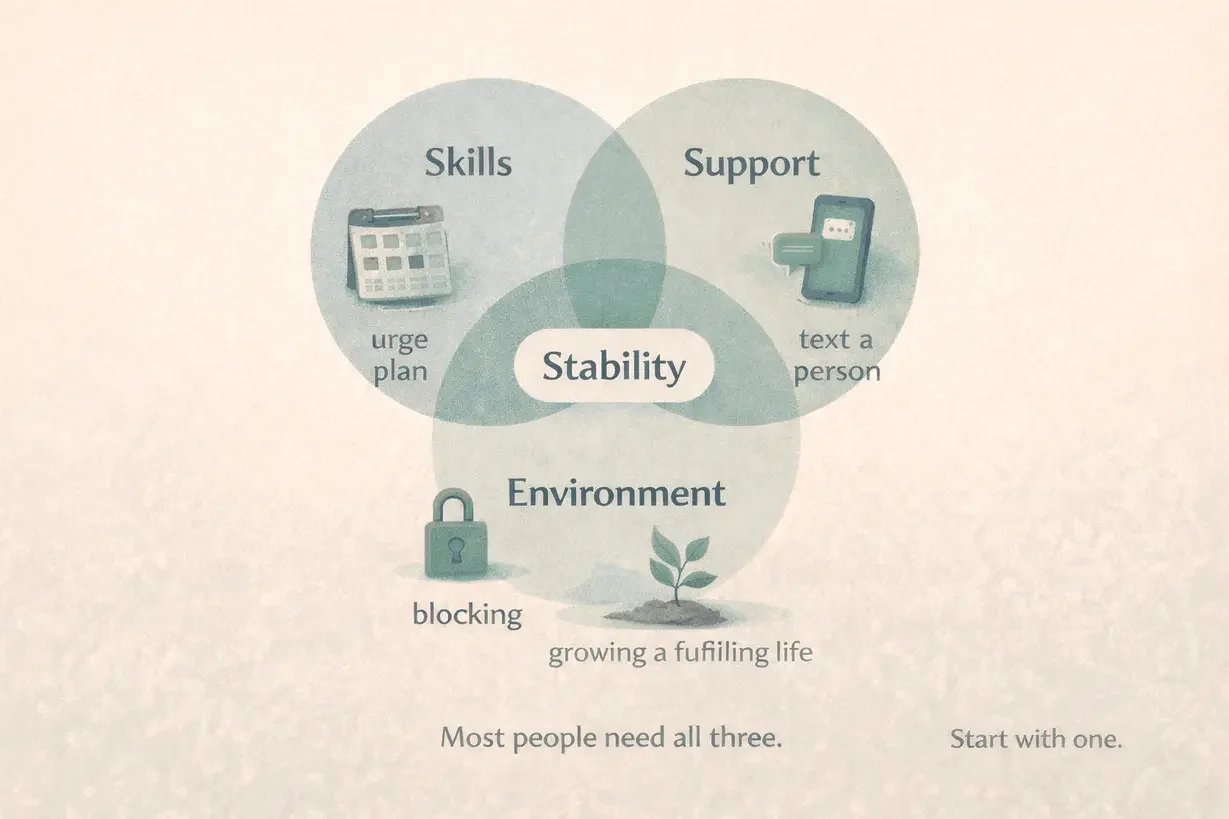
This guide is a menu, not a checklist. If you try to change everything at once, it usually becomes overwhelming. Pick one step that feels realistic, practice it for one to two weeks, then add the next. Small changes repeated consistently usually beat big changes that burn out fast.
If you want the short version, start here:
Get clear on why you want porn to take up less space.
Map your pattern so urges become predictable.
Change access so porn is not always one tap away.
Learn skills for urges so you can ride the wave without obeying it.
Replace what porn has been doing for you.
Build support so you are not fighting this alone.
Rebuild routines and lifestyle around your hardest windows.
Plan for slips so one moment does not become a spiral.
Step 1: Get clear on your reasons and your goal
This change is usually uncomfortable, and it often takes longer than people expect. That is why motivation matters. When urges spike, the brain will offer convincing arguments to give in. Keeping your reasons close gives you something real to return to.
Write down your reasons to change
Pick the top three to five that feel most honest.
Examples:
I want better sleep and energy.
I want to feel more confident and steady.
I want to be more present in my relationship.
I want more motivation and follow-through.
I want my sex life to feel more connected and satisfying.
I want to feel aligned with my values again.
Also name what porn gives you
This is not to justify it. It is to stay realistic about what you are giving up in the short term.
Examples:
Quick stress relief
A burst of stimulation
Escape from overwhelm
A sense of comfort or control
A way to feel wanted
A fast way to shut off loneliness
When you can hold both sides, your plan becomes more compassionate and more effective.
Notice where porn is getting in the way
Take note of the biggest costs for you.
Sleep: staying up later than you want
Mood: more irritability, flatness, or anxiety
Work: lost time, lower focus, procrastination
Relationships: secrecy, distance, less presence
Sex life: arousal changes, dissatisfaction, sexual dysfunction concerns
Goals: less momentum and less follow-through
Self-respect: feeling divided from your values
This keeps your plan connected to a real life outcome, not just deprivation.
Exercise: clarify your goal
Write one sentence:
“My goal for the next 30 days is…”
Pick one
Stop completely.
Cut down to a level that feels healthy.
Remove certain types of content.
Take a break and reassess how I feel.
Then write one sentence:
“If I follow through, I’ll be moving toward…”
Keep this on a notecard, your phone, or somewhere you can see on a daily basis.

Step 2: Map your pattern and triggers
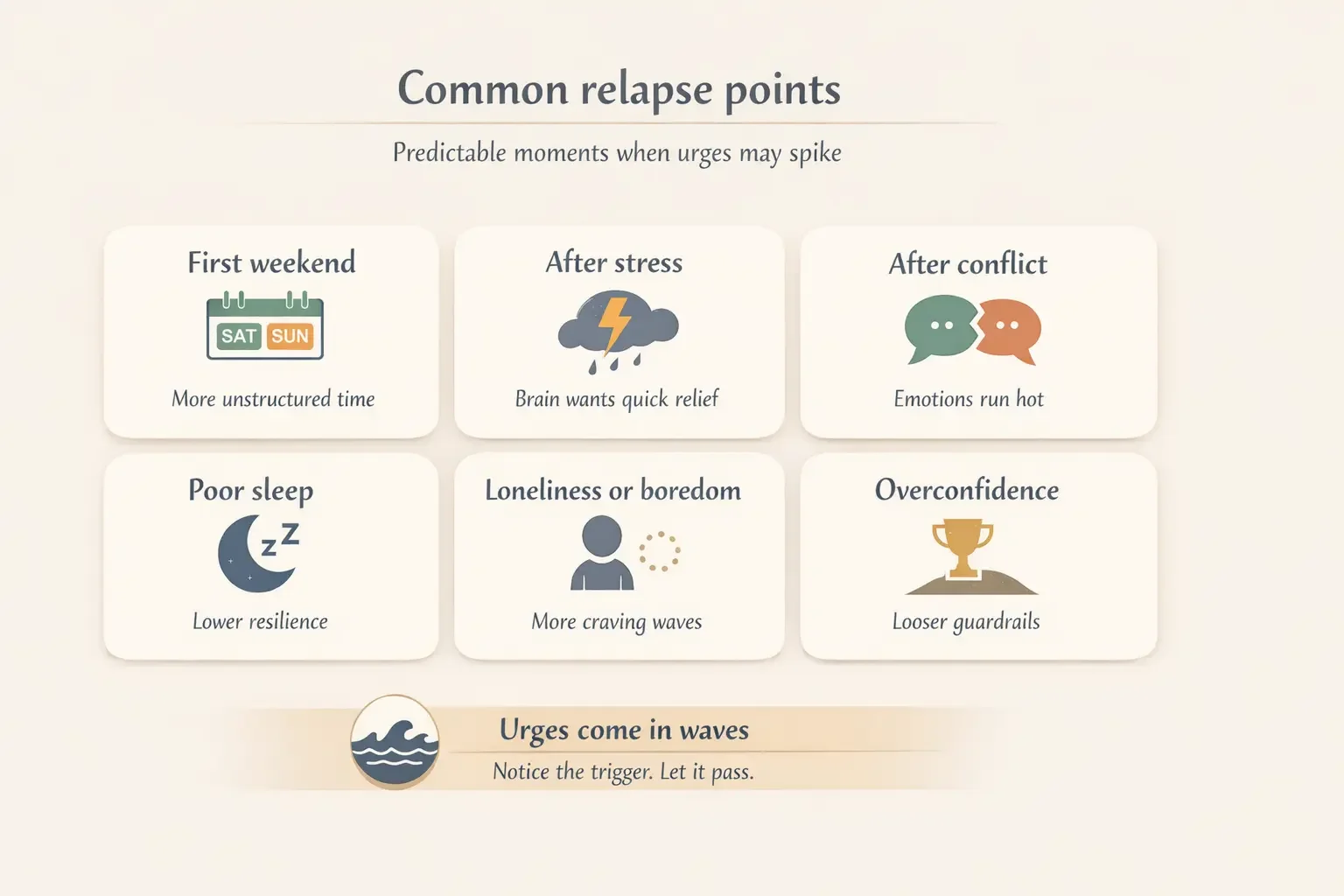
You cannot change what you cannot see. Mapping your pattern turns this from random failure into a predictable sequence with interruptible moments.
Feeling stuck can be confusing and exhausting. You may delete apps, try blockers, make rules, or promise yourself that this time will be different, only to find yourself back in the same cycle.
For many people, this is not about being a good or bad person. It is about a pattern that becomes automatic, especially during stress, boredom, loneliness, overwhelm, or late-night fatigue.
High-risk windows:
Late nights in bed, Bathroom breaks, Evenings after work, Unstructured weekends, After conflict or rejection, When you feel wired-tired
Common triggers
Stress, anxiety, boredom or understimulation, loneliness, shame, exhaustion, emotional overwhelm.
What you are collecting and why
You are collecting useful information, not building a case against yourself. When you know your pattern, you stop relying on motivation and start relying on strategy.
For one to two weeks, jot down::
What sets the loop in motion
What emotional state is most risky
What time and place makes urges stronger
What usually happens right before the decision point
What permission thoughts tend to show up
This reduces shame, because “I’m broken” becomes “I can see the sequence.”
Keep it short. You are not writing a diary. You are building a map. Feel free to use the worksheets in our PDF if that would be helpful.
Step 3: Change your environment so porn is not one tap away
If porn is always within reach, you are fighting uphill, especially when you are tired or stressed. This step matters because it reduces how often you have to rely on willpower in your hardest moments.
Technology friction
Small speed bumps create breathing room. Breathing room creates choice.
Here are some possible options, you can decide based on the triggers we mapped out above:
Remove bookmarks and saved links
Log out of sites so re-entry takes effort
Turn off autoplay and reduce algorithmic triggers where you can
Use a separate browser or separate user profile for work versus personal time
Use downtime settings or app limits during your highest-risk windows
Consider content restrictions and accountability settings where appropriate
For step-by-step options, you can also read my Porn Blocking Guide.
Physical environment changes
Physical changes matter because they reduce your exposure to cues during the exact times your brain is most likely to run on autopilot. A different environment often creates a different outcome, even with the same urge.
You can make changes based on what areas lead to the most difficult urges:
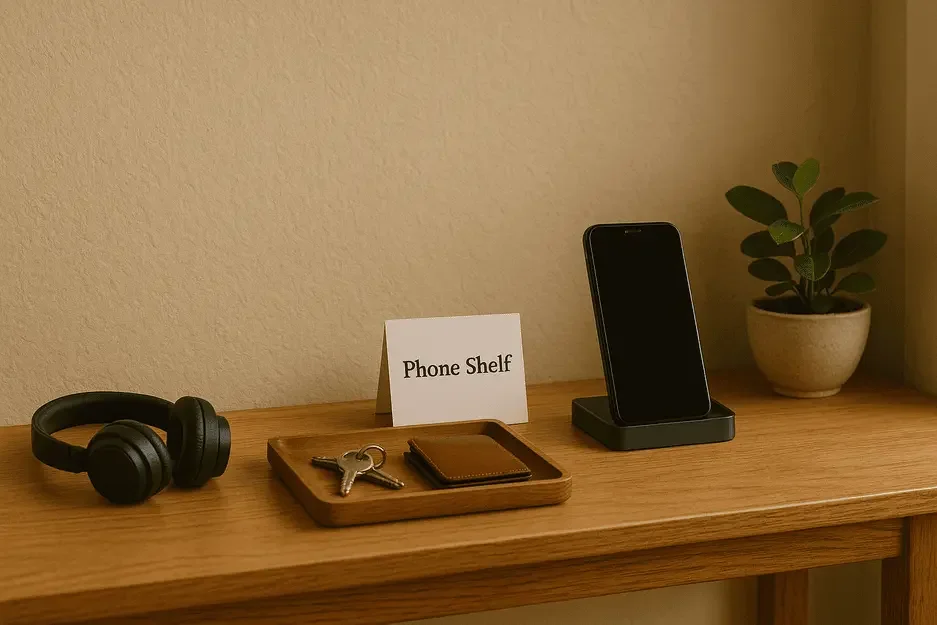
Charge your phone outside the bedroom
Use an alarm clock so your phone does not need to be near your bed
Keep your laptop off the bed and out of the bathroom
Create a device shelf where your phone lives after a certain time
Move vulnerable time into a more public space, even inside your home
Reduce long stretches of unstructured isolation when possible
This is not punishment. It is structure.
What to expect when you cut back
When people reduce or stop a long-standing habit, it’s common to feel some discomfort as your brain adjusts to change, especially if porn has been your go-to tool for stress relief, stimulation, emotional escape, or sleep.
Some people notice restlessness, irritability, difficulty concentrating, mood swings, sleep disruption, cravings, or feeling flat and understimulated. These experiences often ease over time, but the pace varies. If you want a realistic sense of how this can unfold over time, you can also read the Porn Recovery Timeline.
Step 4: Learn skills for urges, not just willpower
Urges can feel huge. But urges are not commands. They are usually a mix of body sensations, mental images, and a pull toward relief.
Often, an urge is your brain reaching for a familiar solution to a real problem, like stress, loneliness, fatigue, shame, or understimulation.
The goal is not to eliminate urges. The goal is to change your relationship to them so you can ride them without obeying them.
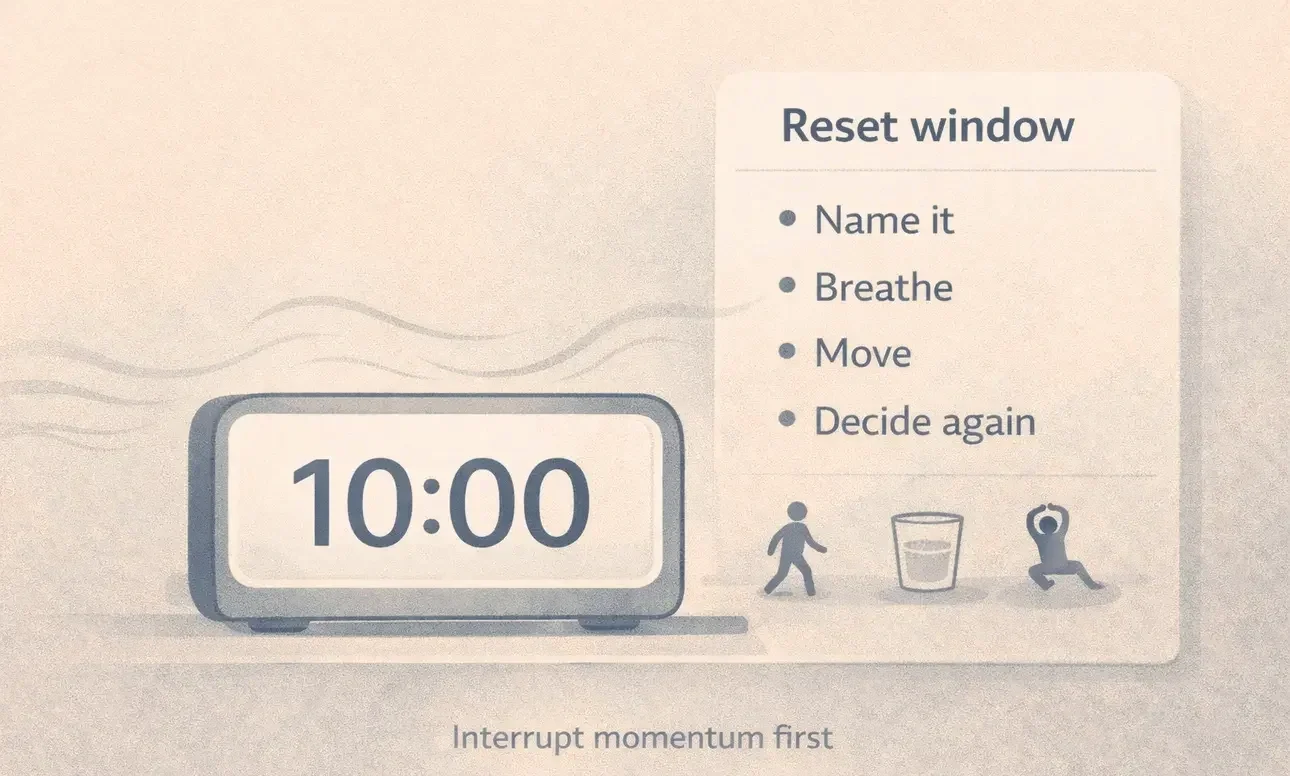
A simple plan for the peak
Name the urge.
Slow your breathing and orient to the room.
Wait 10 minutes before deciding.
Do one regulating action during that 10-minute window that changes your state.
This works best when the goal is to interrupt momentum first, not to win an argument with your mind.
Practice before urges get intense
Two-minute delay reps:
Once a day, practice delaying an impulse for two minutes. This trains the exact skill you need when urges hit: the ability to pause before acting. Over time, small delays can weaken automatic momentum and lower the feeling that urges are emergencies.
A simple way to do it:
Pick a mild impulse once a day, (any sort of craving or urge will do)
Set a two-minute timer.
Breathe slowly and let the urge exist without fixing it.
When the timer ends, choose deliberately rather than automatically.
Why it helps:
It builds confidence that you can wait by training your nervous system to tolerate discomfort without escaping.
It also can help reduce the all-or-nothing thinking that often fuels relapse.
Step 5: Replace what porn has been doing for you
Porn is usually serving a role. If you remove porn but keep the same stress, loneliness, boredom, avoidance, or emotional pressure, your brain will keep pushing you toward the fastest relief it knows.
Common roles include calming stress, creating stimulation, numbing sadness or shame, escaping overwhelming thoughts, feeling wanted or powerful, reducing loneliness, or helping you fall asleep.
This is where white-knuckling often breaks down. In recovery circles, people sometimes describe a “dry drunk” idea: the behavior is gone, but the underlying patterns are still running. The person looks better on the outside, but still feels stuck, lonely, overwhelmed, or dissatisfied, so the pull returns.
Lifestyle change starts here
Ask: what makes porn feel necessary in my life right now?
If it is chronic stress, you may need better downshifting habits and boundaries.
If it is loneliness, you may need more connection and less isolation.
If it is boredom or flatness, you may need more reward and progress in daily life.
If it is sexual dissatisfaction, you may need relational work, intimacy skills, or gradual steps toward dating and social confidence.
If you want to see how this kind of work is approached in counseling, you can also read How Porn Addiction Therapy Works.
Sex and relationship satisfaction
Sometimes porn connects to feeling unsatisfied sexually or emotionally. If you are in a relationship, that may mean working on communication, intimacy, and patterns that are creating distance between you and your partner. If you are not in one, it may point toward self-work that supports confidence, social skills, and reducing social anxiety over time.
Dream life prompt
When porn takes up less space, many people notice they have more time, more emotional bandwidth, and more motivation. The point is not just to remove porn. The point is to build a life you actually want to show up for.
Take a minute and imagine two snapshots.
One year from now
If this pattern was significantly improved, what would be different in your daily life?
What would your evenings look like?
How would your mornings feel?
What would you be doing more consistently?
What would you feel proud of?
Now bring it back to the present.
What is one small change this week that moves you one step toward that picture?
Step 6: Get support and accountability
Porn overuse is often much harder to change in isolation. Not because you are weak, but because secrecy and automatic habits tend to thrive alone.
Support does not mean telling everyone. It means having at least one safe place where the pattern can be seen without shame.
What support can look like
A therapist for structured planning and skills
A trusted friend or mentor for honest check-ins
A support group for normalization and momentum
An accountability partner for quick interruption of urges
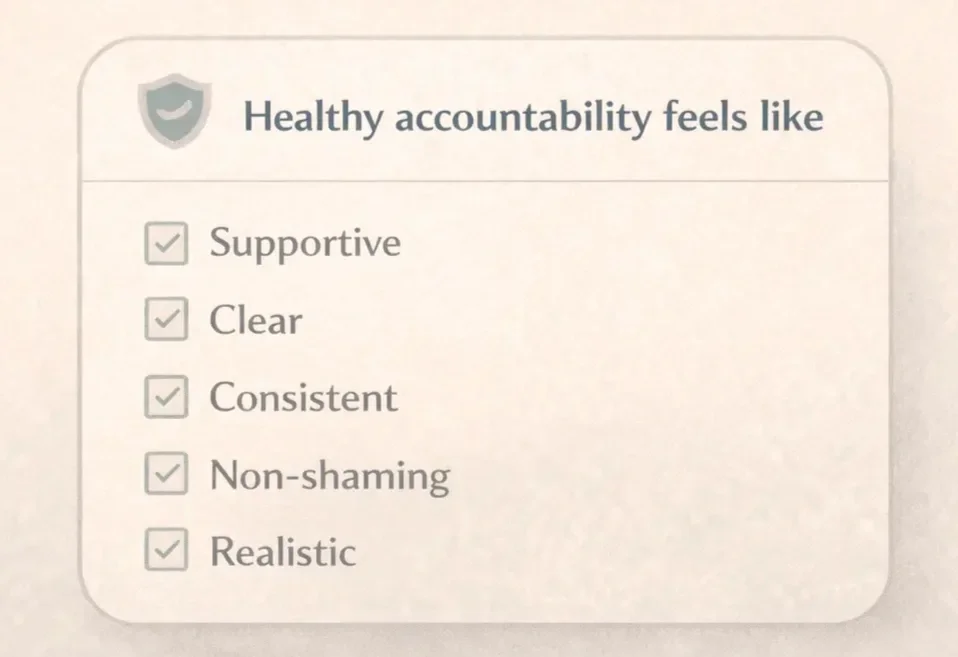
What healthy accountability feels like
Supportive, not shaming
Clear, not controlling
Consistent, not intense for a week then disappearing
A practical tool is having someone you can text when urges spike:
“Urge is high. I’m taking a walk and putting my phone on the shelf for a bit.”
Even if they do not respond right away, sending the text often creates a pause that breaks secrecy and slows momentum.
Step 7: Rebuild routines around your hardest windows
Recovery gets easier when your days are not structured around stress and escape. Focus on your highest-risk windows first. The goal is not a perfect routine. The goal is fewer unplanned vulnerable moments.
Start with one window
Pick the time you most often slip:
Late nights
After work
Weekends
After conflict
When you feel lonely
Then build one small structure around it.
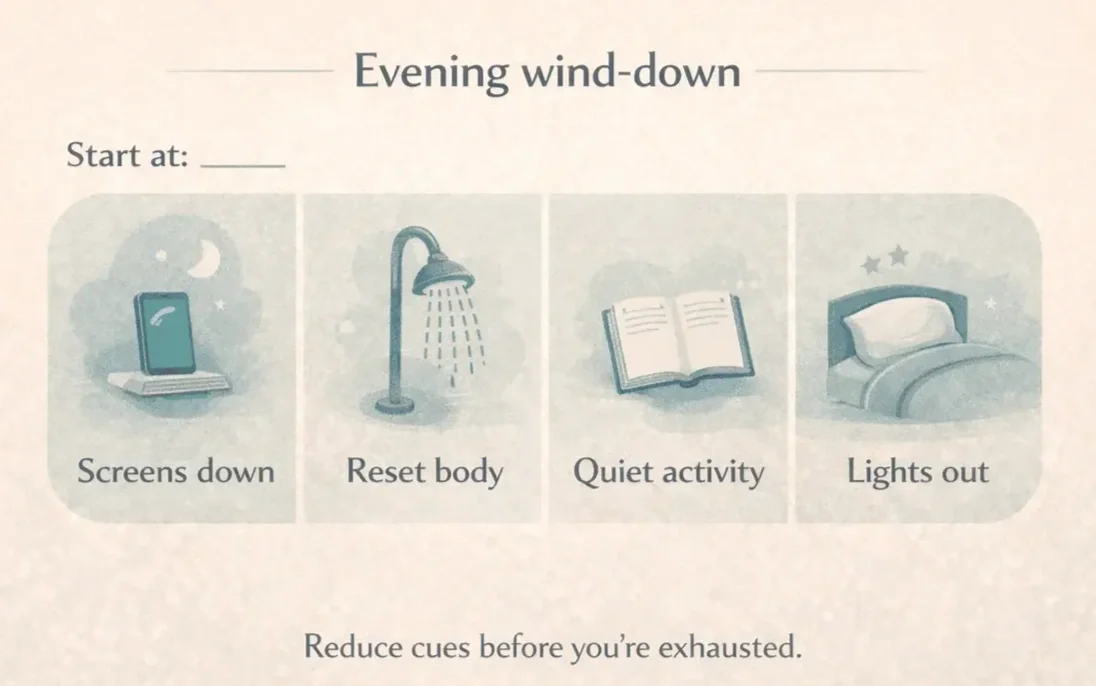
If nights are the hardest
Choose a consistent “phone off” or “screens down” time.
Decide where your phone sleeps.
Pick one calming activity that is easy to start.
The win is not doing it perfectly. The win is creating a different default.
If weekends are the hardest
Create three anchors:
One activity outside the house
One point of human contact
One small project you can finish
Weekends often become risky when there is too much unstructured time plus isolation.
If you have ADHD or feel understimulated
Make the plan tiny and obvious. Big plans usually fail when your energy is low.
One movement exercise (walk, stretch, etc).
One small task.
One simple rule like “no phone in bed.”
Step 8: Plan for slips and prevent a spiral
Slips happen, but a slip does not have to turn into a full relapse. A full relapse is drifting back into old patterns without adjusting anything. A slip can become information and a reset point.
The goal of a slip plan is to prevent the spiral:
Shame leads to overwhelm.
Overwhelm leads to more urges.
More urges lead to hopelessness.
A good plan interrupts that chain early.
Right after a slip
Reduce access for a bit. Put your phone in another room or turn devices off.
If you are comfortable tell a safe person. A short text is enough: “I slipped, I’m resetting.”
Do one regulating action that calms your body.
The next day
Look back with curiosity:
What stressors were present?
What feelings were you trying to escape or soothe?
What cues did you ignore earlier in the day?
What would have helped 30 minutes before?
Then pick one small adjustment for next time.
Emotional, cognitive, and physical relapse
Relapse often unfolds in stages, and catching it early can prevent a physical slip.
Emotional relapse
This stage can build weeks or even months beforehand. It is less about porn and more about your overall state.
When life is going reasonably well, porn often feels less urgent and less sticky. When life is depleted, chaotic, lonely, or overwhelming, porn becomes a quicker shortcut.
Common thoughts:
“I’m exhausted.”
“I don’t feel like myself.”
“I don’t care right now.”
“Nothing is really helping.”
Often this creates a situation for relapse and reduced willpower: more stress, more scrolling, more pressure, and more avoidance.
If you catch this stage early, the best move is usually stabilizing your life and rebuilding support, not simply trying harder.
Cognitive relapse
This stage often shows up minutes to hours beforehand. It is when the mind starts bargaining and building permission.
Common thoughts:
“Just this once.”
“I deserve it.”
“I’ll quit again tomorrow.”
“Today is already ruined anyway.”
Treat these thoughts as warning lights. If you respond early with support, structure, and access changes, you often prevent the physical relapse entirely.
Physical relapse
This is the behavior itself: searching, edging, watching, acting out.
This is why lifestyle changes matter. If you only focus on “don’t watch porn,” but keep the same stress load, isolation, sleep deprivation, and lack of meaning, the earlier stages tend to return and make the physical relapse easier.
The further out you catch yourself slipping, the easier it is to recover and stay on track.
Progress looks like this
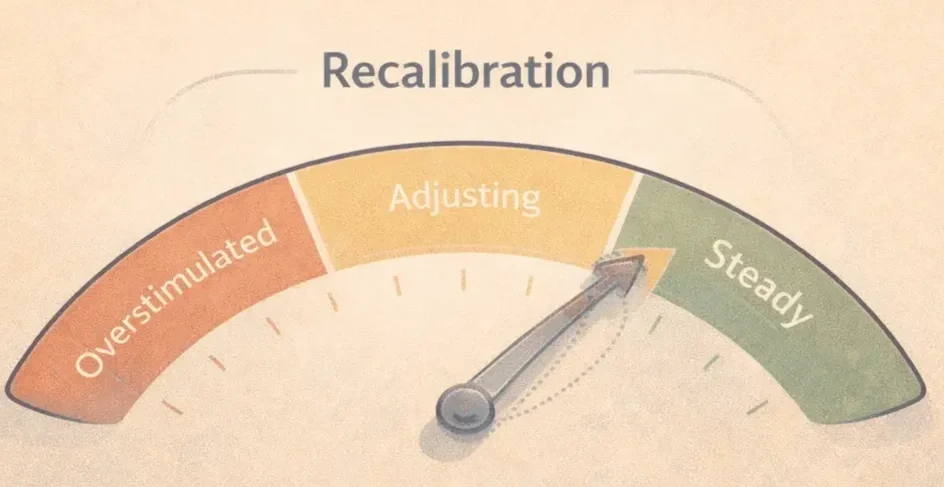
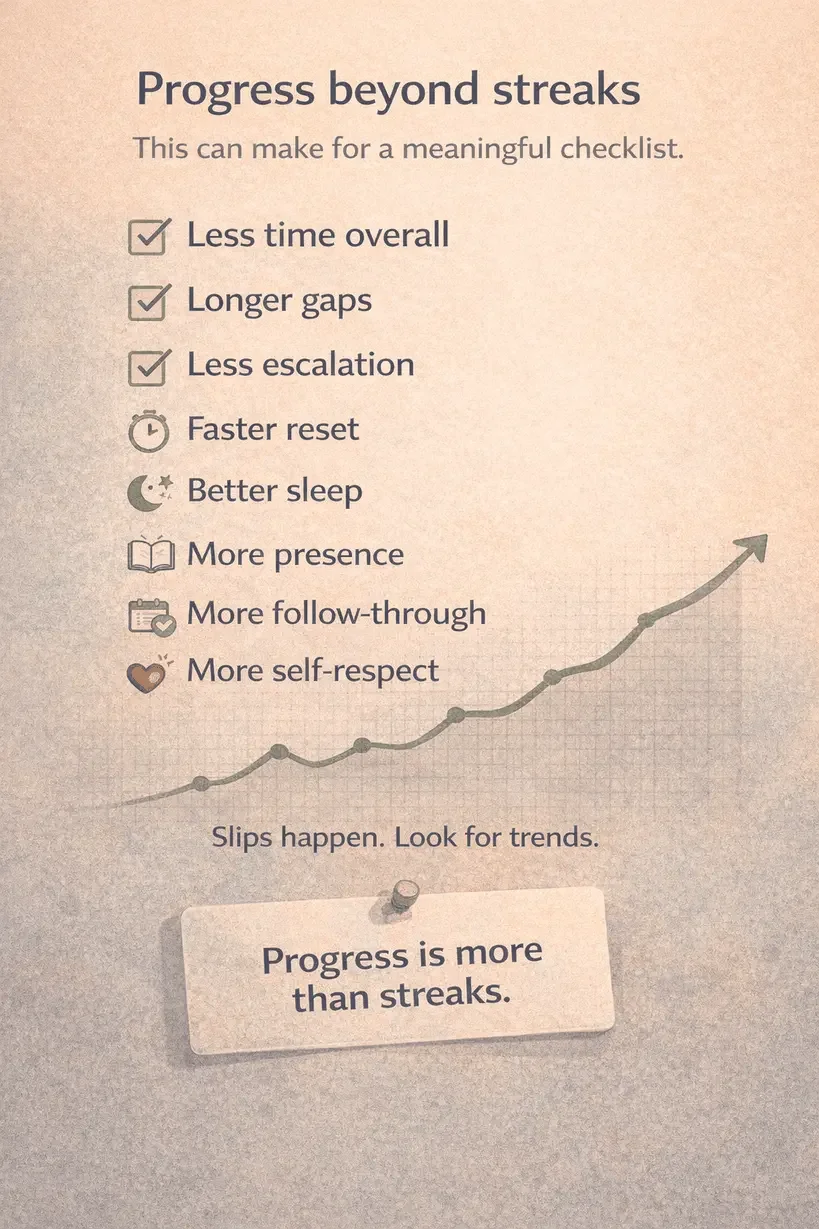
Progress is not only about streaks. Streaks can motivate, but they can also create an all-or-nothing mindset.
Slips happen. They are part of behavior change and not something to beat yourself up over. What matters most is how quickly you reset, learn, and return to your plan.
Improvement can look like this:
Less time spent overall
Longer gaps between episodes
Less escalation and less binge momentum
Better sleep and more energy
More presence with people
More follow-through on goals
A steadier sense of self-respect
Look for trends, not one bad day.
Closing
You do not have to do this perfectly. Start with one small step this week: map your pattern, add friction to access, practice the ten-minute urge plan, or choose one support person you can text.
About Me: I help people work through porn overuse by clarifying patterns, building urge skills, reducing shame, and rebuilding a life that feels steadier and more values-aligned. If you want more individualized support, you can also look at Porn Addiction Therapy in Florida.
Further Reading
Want to learn more?
How Porn Addiction Therapy Works →
A calm walkthrough of what treatment can look like, what sessions focus on, and how I help you build new habits without shame.What Are the Signs of Porn Addiction →
A clear, practical breakdown of common behavioral, emotional, and relational signs, so you can understand what may be happening rather than guessing.Porn Recovery Timeline →
A realistic overview of common phases people report as they reduce or stop porn, including why progress can feel uneven and what to do when urges spike again.