Porn Addiction Signs and Symptoms
How to Recognize the Patterns and Get Support
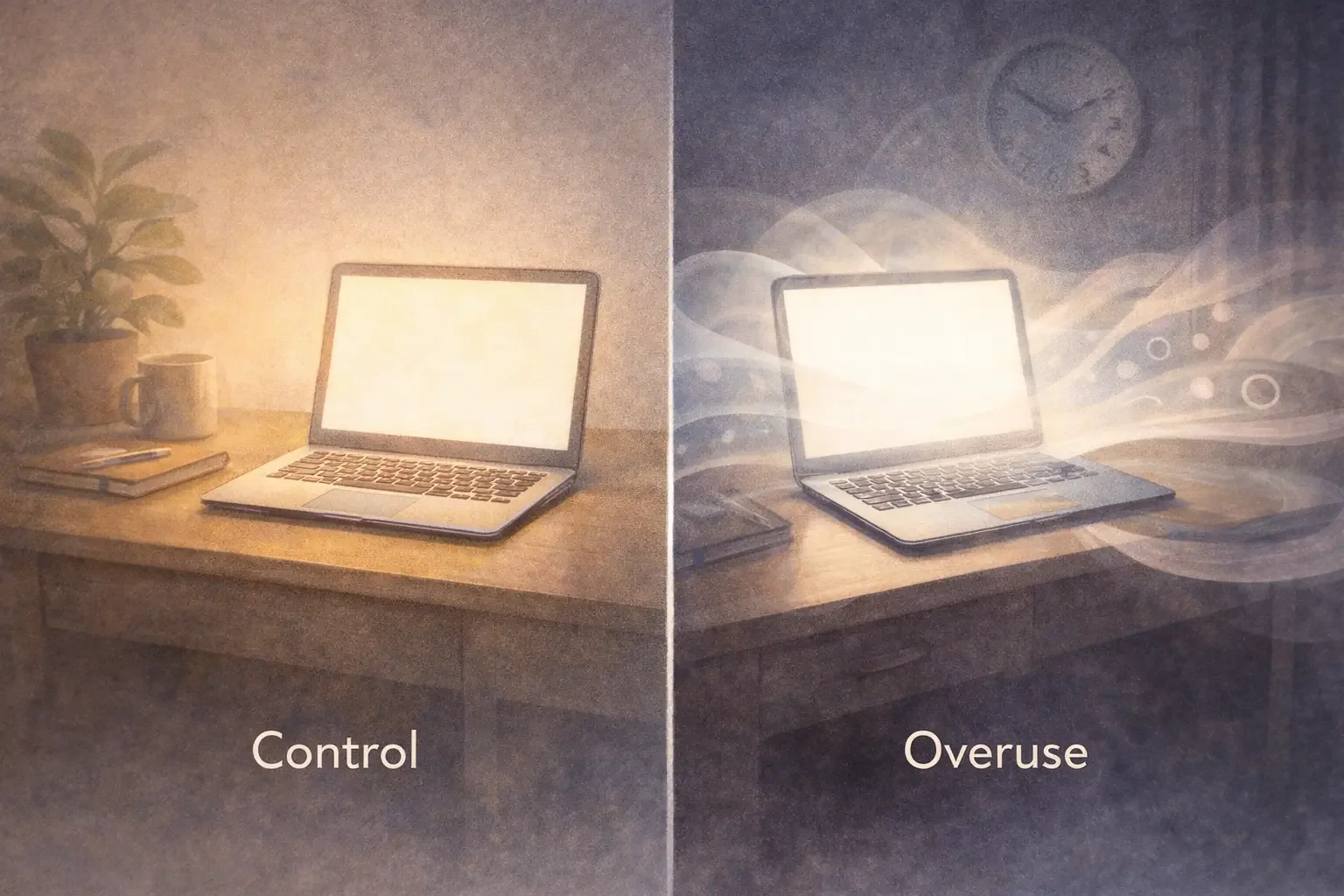
Many people don’t realize their relationship with porn has shifted until it begins affecting how they think, feel, connect, or cope. These patterns rarely appear all at once — they tend to develop gradually, often during times of stress, loneliness, or overwhelm.
If you’ve been searching for signs of porn addiction, porn addiction symptoms, or what is considered porn addiction, this guide may help you understand these experiences with more clarity and less shame.
If you’re looking for a clear starting point and support options in one place, you can also visit my Porn Addiction Therapy in Florida page.
What Is Considered Porn Addiction?
“Porn addiction” isn’t a formal diagnosis, but many people use the term to describe patterns that feel overwhelming or hard to interrupt. It’s less about how often you watch and more about how the behavior feels in your daily life.
Some people notice they’re watching longer than intended, relying on porn to unwind, hiding the habit, or feeling conflicted afterward. Others notice changes in sleep, motivation, mood, or how present they feel during intimacy.
As one person put it:
“I wasn’t watching for pleasure anymore. I was watching because I didn’t know how to stop.”
When a Coping Habit Quietly Takes Over
Imagine someone like Alex: what started as a way to decompress after work slowly turned into staying up hours later than planned. He’d shut everything down feeling guilty and tense, promising himself the next night would be different. Instead, the habit kept tightening until his sleep, motivation, and mood all slipped.
This kind of gradual shift can be quite common. If you are unsure whether your own pattern has crossed a line, the quick self check below can help you get a clearer sense of what you are noticing.
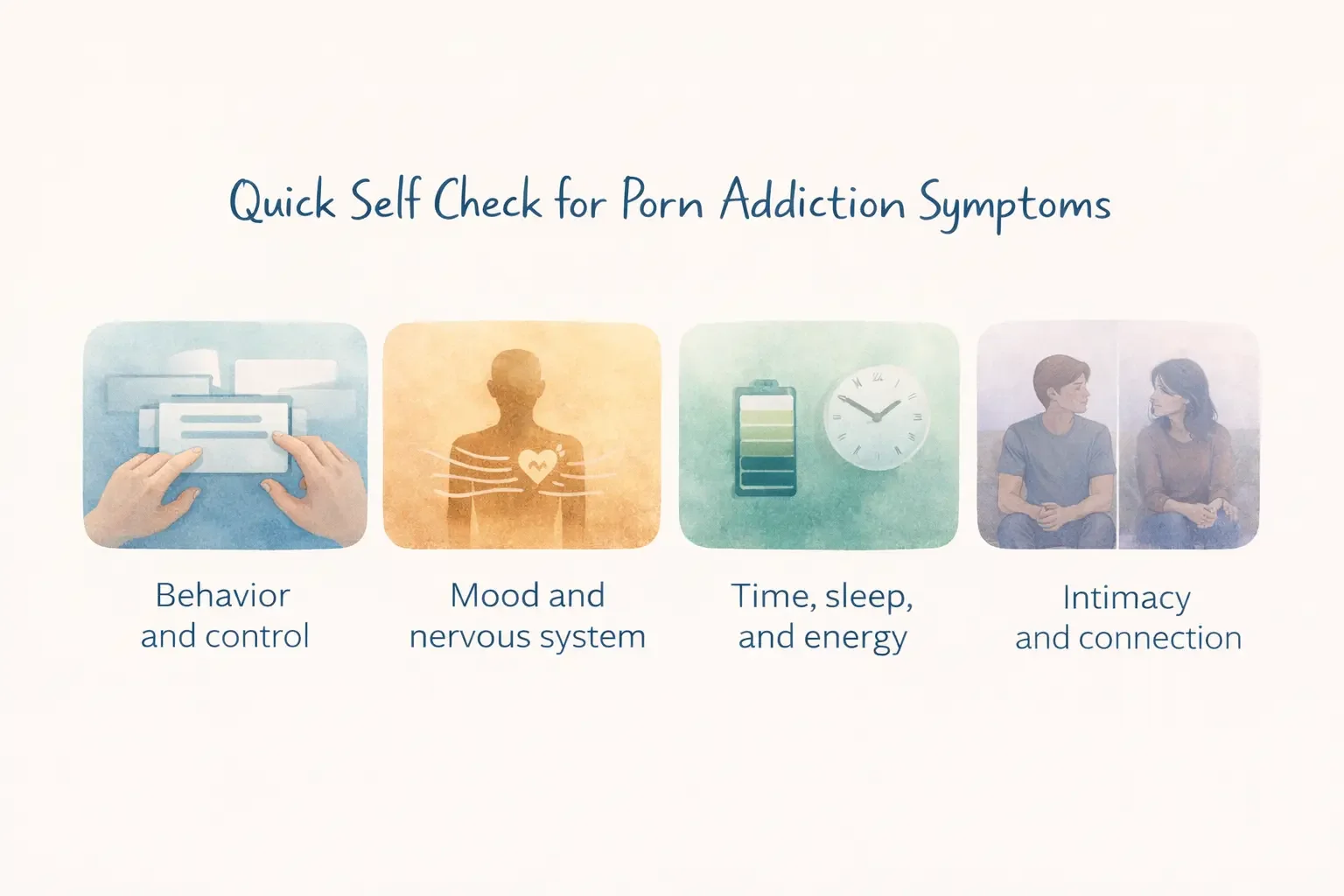
Quick Self Check for Porn Addiction Symptoms
If you relate to 3 or more of the items below, it may be worth looking closer, especially if the pattern has been lasting for months or years.
Behavior and control
You feel pulled toward porn automatically when stress or boredom hits
You try to stop or cut back, but the pattern keeps returning
You find yourself opening tabs or checking out of habit without fully choosing to
“It became muscle memory — stress hit and my mind went straight to the same sites.”
Mood and nervous system
You use porn mainly to soothe anxiety, loneliness, overwhelm, or emotional numbness
You feel more tense overall when the habit feels secretive or out of sync with your values
“It helped for five minutes, then I felt worse than before.”
Time, sleep, and energy
You stay up later than planned or lose track of time
You notice porn use crowds out workouts, hobbies, goals, or downtime that restores you
You feel stuck in avoidance loops that affect productivity or self confidence
“I’d wake up feeling foggy and behind before the day even started.”
Intimacy, connection, and relationships
You feel less present, less interested, or more anxious about real intimacy
You notice erections feel less reliable with a partner, or you have more difficulty getting or staying aroused during real intimacy than you used to.
You feel distance or tension in your relationship because you are hiding the habit
“I felt more anxious about intimacy, so I avoided it, and got more isolated over time.”
If any of these resonate, you are not alone. This is often a sign that porn has shifted from something occasional into a coping loop that is starting to cost more than it gives.
Why Porn Can Become a Pattern
Most people are not trying to create a problem. Porn often starts as a fast, reliable way to shift an internal state when life feels heavy.
For some people, it becomes a way to get quick relief from stress or anxiety, a moment of escape from pressure, or a sense of comfort during loneliness. For others, it is a predictable way to unwind at night or feel a bit more in control when everything else feels uncertain.
The hard part is that it can work immediately. Over time, the urge can start showing up faster and more automatically. Not because someone is weak, but because the brain is doing what it was designed to do: repeat what brings quick relief — even if there are long term downsides.
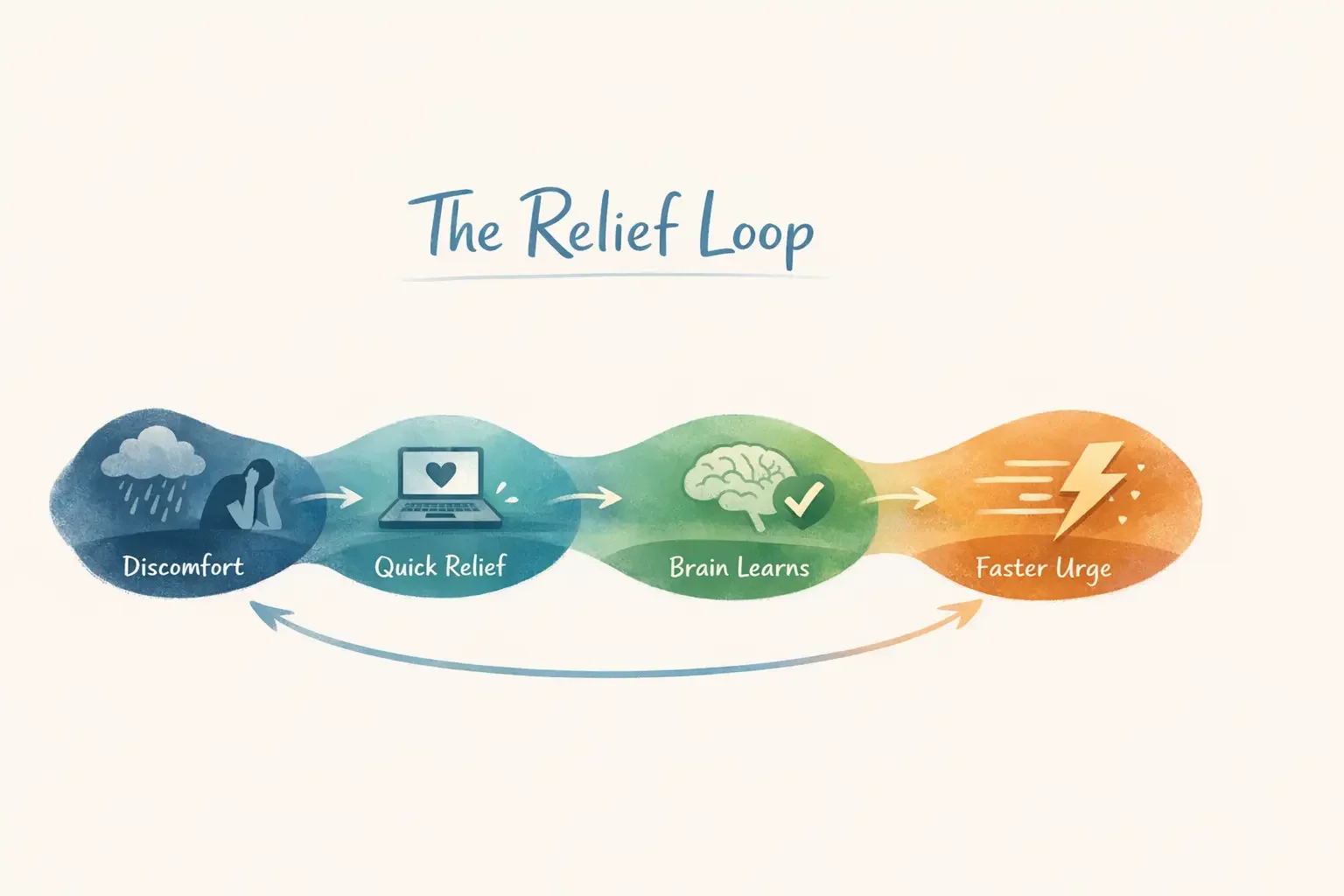
A simple way to picture it is the relief loop:
Discomfort shows up.
Porn reduces the discomfort quickly.
Your brain learns, “Do that again.”
The next time discomfort appears, the urge returns faster.
If this feels familiar, it does not mean anything is wrong with you. It usually means you found a reliable way to cope, and now you are noticing it is no longer working the way it used to. That awareness is a meaningful place to start.
If you would like a deeper explanation of why this loop can feel so hard to interrupt once it is established, you can read: Why Porn Is So Hard to Quit.
How Porn Addiction Symptoms Can Affect Intimacy
Some people notice a shift in their sexual response. The brain can adapt to fast novelty and high stimulation, which may make real intimacy — slower, relational, and less intense — feel different at first.
People often describe:
difficulty staying mentally present during intimacy
needing faster or more intense stimulation than before
feeling less responsive with a partner
As one person said:
“It wasn’t that I wasn’t attracted to my partner. My mind just didn’t respond unless things felt overly intense.”
These experiences can feel scary, but they are more common than people think. They often reflect stress, conditioning, and anxiety, not a lack of attraction or care.
Porn and Dating
People often feel confused when they genuinely want a relationship but feel too anxious, overwhelmed, or disconnected to pursue one. When porn offers fast relief, dating can feel emotionally risky or exhausting.
As one person put it:
“I wanted to date, but porn made me feel like I already had the reward without the effort.”
Sometimes the core issue is not dating itself, but the anxiety that shows up around vulnerability, rejection, or performance. If that feels like your experience, you may find it helpful to learn more about social anxiety and how it can shape avoidance.
Common Ways People Rationalize or Minimize
When a habit is starting to shift, it is common to explain it away. Many people tell themselves things like:
“It’s not that often.”
“I only do it when I’m stressed.”
“At least it’s not hurting anyone.”
“I can stop whenever I want.”
Sometimes those statements are true. But if you are repeatedly trying to stop, feeling distressed, or noticing real negative impact, the question becomes less about justification and more about support and clarity.
Secrecy and the “Double Life” Feeling
One of the strongest signs that porn is becoming a problem is secrecy.
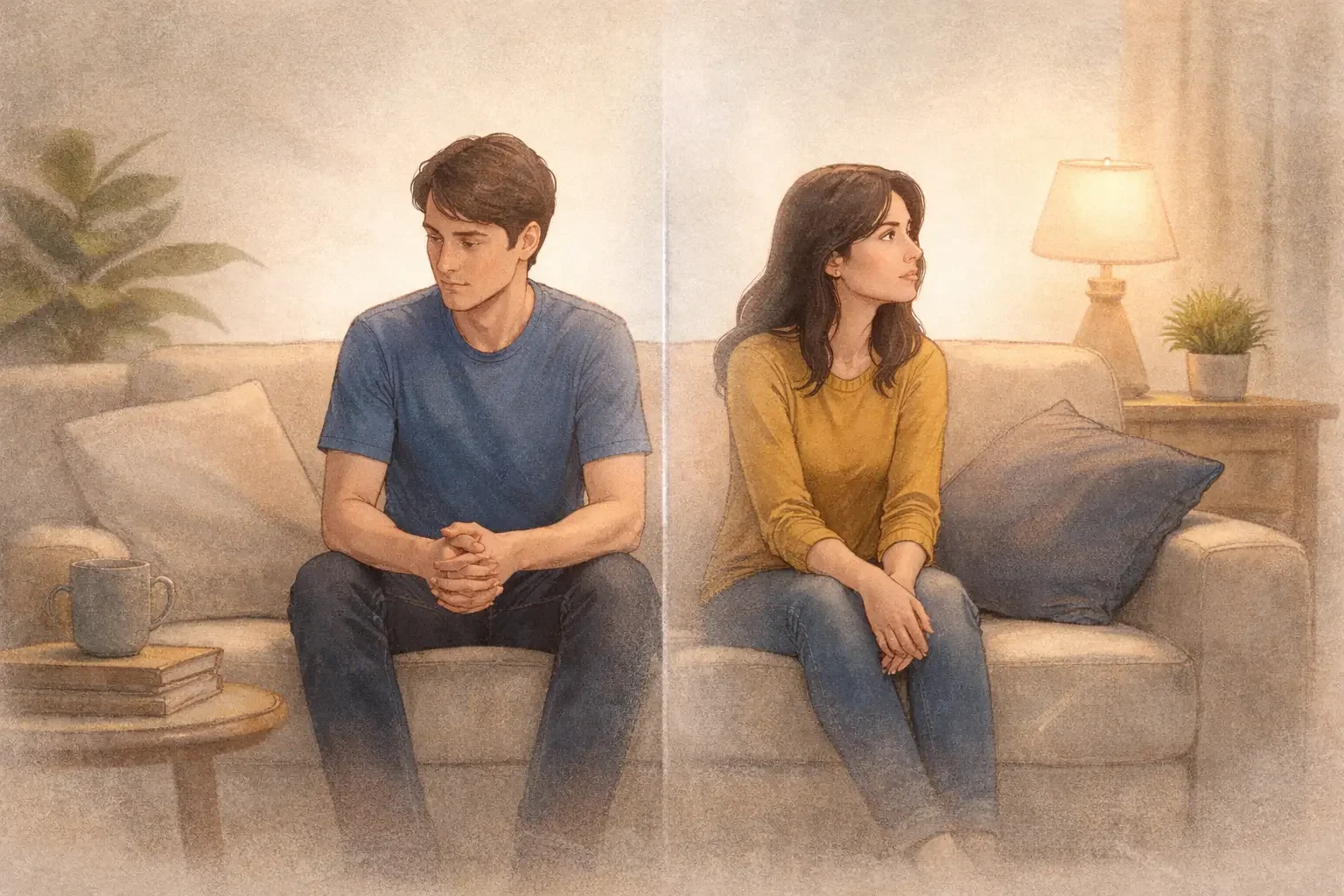
Some people notice they are hiding tabs, deleting history, or changing routines to avoid being seen. Others feel on edge about being found out, or feel divided between “the outside me” and “the private me.” Even when no one confronts them, the secrecy itself can increase tension, shame, and distance in relationships.
Do I have a Porn Addiction?
If you’re asking how much porn is too much porn, you’re usually asking about impact, control, and whether the pattern is starting to cost more than it gives.
A helpful way to think about it is impairment. That means porn use is creating noticeable downsides in daily life, such as your sleep, energy, productivity, emotional steadiness, sexual confidence, relationships, finances, time, or sense of connection.
If you’re unsure, focusing on impact is usually more helpful than focusing on a label.
If you’re ready for next steps, How to Quit Porn lays out a practical starting path, and How Porn Addiction Therapy Works explains what support can look like if you don’t want to do it alone.
When it feels too hard to change alone
If you are seeing yourself in parts of this page, you do not have to sort it out alone. You do not need to be in crisis for this to be worth addressing. If porn has started to feel more automatic or less aligned with your values, therapy can be a calm place to explore what is happening and what you want to change.
About the Author
I’m Joseph Brooks, a therapist in Florida working with adults navigating concerns related to porn use, technology habits, anxiety, and overwhelm. My approach is warm, practical, and nonjudgmental.
If you are interested in learning more about how therapy can help porn recovery in Florida, check out my Porn Addiction Therapy in Florida page.
Frequently Asked Questions
Can you have symptoms even if you watch less often?
Yes. Some people use porn less frequently but still feel significant shame, secrecy, loss of control in the moment, or values conflict. The key question is the pattern and impact, not just the count.
What are the most common signs?
Common signs include watching longer than intended, difficulty cutting back, using porn mainly to cope, feeling secrecy or a double life dynamic, sleep disruption, time loss, and changes in mood or intimacy.
How do I know if it’s affecting intimacy?
People often notice reduced presence during intimacy, more anxiety about performance, difficulty staying engaged, needing more novelty or intensity, or feeling more disconnected or avoidant in dating and closeness.
When should I reach out for help?
If you have tried to change the pattern and it keeps returning, if you feel stuck in distress or shame, or if porn use is affecting your sleep, mood, intimacy, work, or relationships, it may be a good time to reach out for support.
Further Reading
Prefer to learn more? Check out these in depth guides:
How Porn Addiction Therapy Works ->
A calm walkthrough of what treatment looks like, what sessions focus on, and how therapy helps you build new habits without shame.
What change can look like over time, including common rough spots and how to respond.
How to Quit Porn: A Step by Step Guide
A practical, step by step guide for building a plan, handling urges, and staying consistent when motivation dips.