Signs of Screen Addiction and Phone Overuse
Searching for signs of screen addiction or phone addiction signs does not mean something is wrong.
For most people, it reflects growing awareness that their relationship with technology feels less supportive than it used to.
This article is not a diagnosis or a test. It is a calm, practical look at common patterns and screen overuse effects people notice when phone or screen use starts to feel overwhelming.
Who this article tends to help
This page is especially useful if you feel unsure rather than certain.
You may not feel “addicted,” but you notice tension, fatigue, or frustration around your screen use. You might go back and forth between minimizing it and worrying about it.
This article is meant for that in-between space, where something feels off but you are not sure what to call it.
Things people say
People who look up phone addiction signs often describe scrolling longer than they planned, even when they are already tired.
“By the time I realize how tired I am, I’ve already been scrolling for an hour.”
“I don’t even feel excited to be on my phone, I just keep checking it.”
“I pick it up to relax, but somehow I end up feeling more wired.”
Many readers describe a quiet mix of recognition and relief here. You are not alone in noticing this.
If you want a broader overview of support options, you can also explore Technology, Screen, and Phone Overuse Therapy.

What people usually mean by signs of screen addiction
When people use phrases like screen addiction symptoms or signs of phone addiction, they are describing patterns that feel automatic, harder to control, or more intrusive than they would like.
Often, the concern is less about the screen itself and more about impact. People are noticing changes in how they feel, function, or relate to others.
Common concerns people are often pointing to include:
Screen use feeling automatic or reflexive, even when there is no clear reason to be on the phone
Difficulty stopping or switching activities once scrolling or browsing begins
Screen time interfering with sleep, especially late at night
Feeling mentally drained, foggy, or overstimulated after extended use
Feeling disconnected from others despite frequent online interaction
None of these experiences prove addiction on their own. Many people notice one or two of these patterns during stressful periods or life transitions.
The key question most people are really asking is not “Am I addicted?” but “Is my screen use supporting my life right now, or quietly working against it?”
Where addiction fits on a continuum
When people search for signs of screen addiction, they often picture a clear line. Either someone is “addicted,” or they are not.
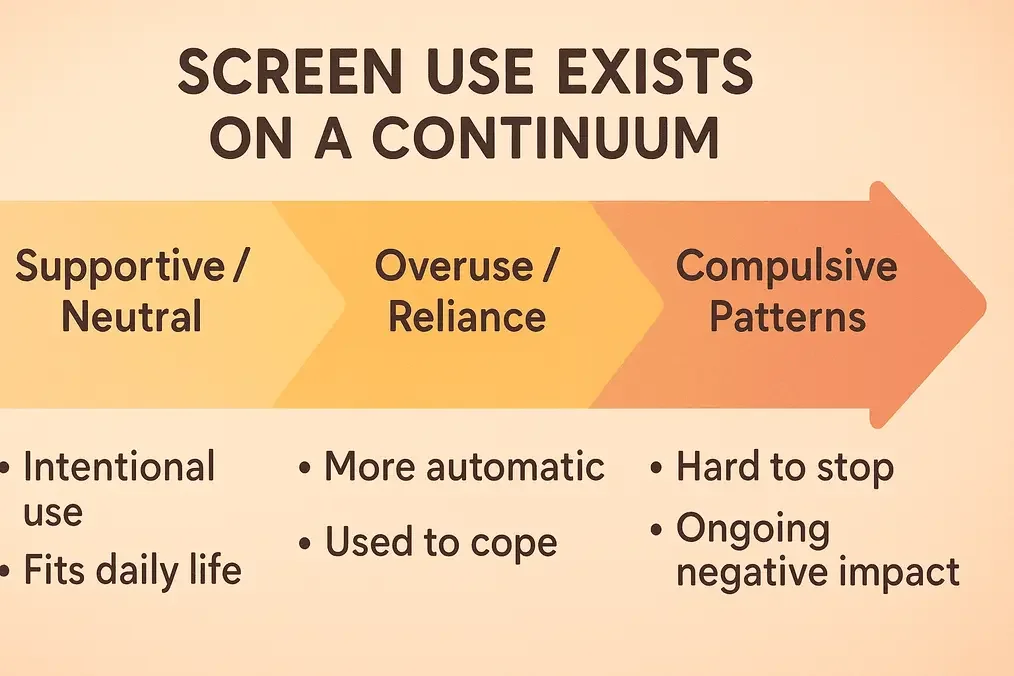
In practice, most patterns of phone and screen use fall along a continuum, not an all-or-nothing category.
On one end are supportive or neutral habits. Screens are used intentionally and generally support work, rest, or connection.
In the middle are overuse or dependence-like patterns. Screen use starts to feel more automatic and harder to interrupt. It may not feel out of control, but it also does not feel fully chosen.
Further along the continuum are compulsive patterns. Screen use continues despite clear negative effects on sleep, mood, relationships, or functioning, and attempts to change feel repeatedly unsuccessful.
Viewing patterns as gradual and changeable makes reflection feel safer and more realistic.
If every concern is framed as addiction, people may feel alarmed or dismiss the issue altogether.
Why it can be hard to tell when screen use becomes a problem
Screens are deeply woven into daily life.
For many people, it is genuinely difficult to function without a phone.
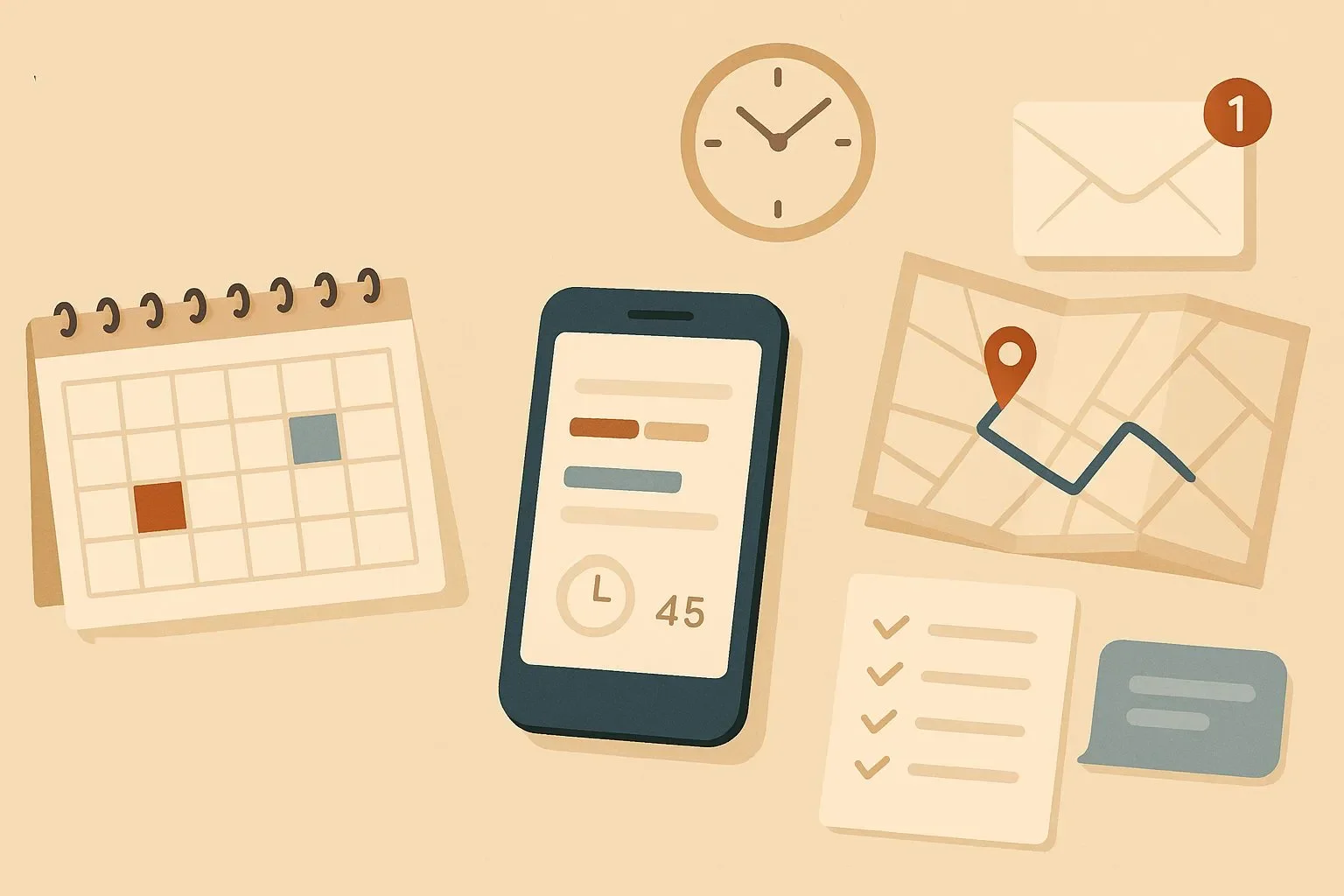
Work emails, schedules, navigation, banking, news, social connection, and even basic logistics often live on a screen. Being reachable is expected, not optional.
Because screens are so necessary, it can be hard to tell when use shifts from supportive to draining.
A two-minute notice
Pause for a moment before continuing.
Notice what your body feels like right now. You might sense calm, alertness, ease, tension, restlessness, heaviness, or nothing in particular.
Those signals are information. They can help you understand whether screens are supporting you in this moment or quietly working against you.
If you feel more settled or focused, your screen use may be serving a useful purpose right now. If you feel more wired, tired, or scattered, it may be a sign that your system could use something different.
Over time, this kind of check-in can offer clues about whether screens feel supportive or draining for you.
How screen overuse can gradually change over time
For most people, concerns about screen use do not appear all at once. They develop gradually, often in ways that are easy to miss.
What people notice first
Screen use begins to feel automatic. People scroll on autopilot, lose track of time, or stay up later than planned, often with a sense of wanting to stop but not quite doing so.When it tends to happen
These patterns usually show up during anxiety, boredom, loneliness, or when avoiding something difficult. In those moments, the phone becomes a fast, reliable way to shift how a moment feels.How it often feels afterward
Over time, people notice emotional or physical effects. This can include irritability when interrupted, restlessness when unplugging, quiet guilt, or a wired-but-tired feeling.Changes in focus and mental energy
Attention can feel harder to access. Tasks are more difficult to settle into, mental fatigue lingers, information feels overwhelming, and comparison creeps in even when someone knows content is curated.What happens when people try to cut back
Some people notice discomfort, such as an urge to check, unease during quiet moments, or uncertainty about how to fill pauses in the day. These experiences vary widely and are not universal.
What matters most
Temporary discomfort does not mean addiction. What matters most is not whether these patterns fit a label, but whether screen use is supporting or working against the life you want to live right now.
A short reflection checklist
This is not a test or a diagnosis. It is simply a set of prompts to help you notice patterns with curiosity rather than judgment.
I reach for my phone automatically, even when I did not plan to.
I stay on my phone or screens longer than intended, especially at night.
I feel mentally tired, foggy, or overstimulated after extended screen use.
I use screens mainly to cope with stress, boredom, or uncomfortable emotions.
I have tried to change my screen habits but keep falling back into the same patterns.
If none of these resonate, that is okay. If a few stand out, that does not mean something is wrong. It may simply mean your relationship with screens is asking for a little more attention right now.
When exploring support might make sense
Some people explore support not because things are extreme, but because they feel stuck.
If you keep cycling back to habits you want to change support can help you understand patterns and create more flexible, realistic boundaries.
If the patterns here connect with you, you can start learning more about Technology, Screen, and Phone Overuse Therapy.
About the author
Joseph Brooks, MA, RMHCI, is a Registered Mental Health Counselor Intern at Brooks Counseling & Wellness in Florida. He works with adults and teens navigating technology overuse, attention difficulties, anxiety, and overwhelm in a digital world.
This article is written from a counseling and digital wellness perspective and is intended for education and reflection, not diagnosis.
Learn more about Joseph and his approach here.
Frequently Asked Questions
-
People use the phrase “phone addiction” in different ways. Some mean patterns that feel compulsive or hard to control. Others mean phone use that interferes with sleep, focus, or relationships.
Here, addiction language is used as a common search term, not a diagnosis.
-
People often mean experiences like autopilot scrolling, loss of time, late-night use, difficulty stopping, irritability when interrupted, or feeling mentally drained afterward.
These experiences vary widely and do not prove a diagnosis on their own.
-
A helpful question is whether it is impacting areas of life you care about.
Sleep, mood, focus, relationships, work or school, and sense of choice are common places to look.
-
People often report mental fatigue, overwhelm, increased comparison, disrupted sleep, or feeling more scattered.
Effects vary based on content, context, stress level, and individual differences.
-
Many people use the phrase too much screen time symptoms to describe noticing mental fatigue, difficulty focusing, disrupted sleep, irritability, restlessness, or feeling overstimulated after extended screen use.
These experiences vary widely and are not a diagnosis. Often, they are signals to reflect on balance, context, and how screen use is affecting daily life rather than proof that something is wrong.
-
No. Many people start by increasing awareness, adjusting routines, or experimenting with boundaries. Therapy can be one option if you want support understanding patterns or feel stuck doing it alone.
-
High screen time on its own does not mean there is a problem. Many people spend long hours on screens for work, school, or connection without negative effects.
Screen overuse is less about how many hours you are on a device and more about how it affects you. Sleep, focus, mood, relationships, and sense of choice are often more meaningful indicators than time alone.