Social Media Addiction & Screen Overuse Therapy in Florida
If you’ve been thinking about cutting back on social media, wanting to feel more present, or feeling worn down by late-night scrolling, you’re not alone. Many people I work with feel conflicted about their phone use, even when they care deeply about making changes.
I’m Joseph Brooks. I work with adults in Gainesville and across Florida who want support around social media and screen overuse without shame, pressure, or rigid rules.
I offer counseling for social media and screen overuse in Gainesville and throughout Florida, with secure telehealth if meeting from home feels easier.

Why Social Media Feels So Compelling
In my work, I see how social media meets very real needs.
Many people turn to their phones for connection, relief, stimulation, predictability, or belonging.
There’s nothing wrong with wanting these things.
The difficulty is that the quick bursts of reward on our screens can sometimes crowd out the slower, deeper forms of rest, meaning, and confidence that support everyday life.
In therapy, I help people understand what their screen use has been doing for them, and we explore small, workable shifts that feel supportive rather than restrictive.
If you’re looking for a broader view, you can also explore how I approach technology overuse more generally.

Who I Often Work With
People I work with around social media overuse often share things like:
“I scroll at night even though I know it will make tomorrow harder.”
“I feel drained after social media, even if I went there to relax.”
“My attention feels scattered — like I’m never fully present.”
If these experiences sound familiar, they’re part of a pattern I see frequently in therapy.
Many people I support aren’t sure whether they’d call this an “addiction.” They just know their relationship with social media feels harder than they want it to be, and they want more control, clarity, or ease.
I often work with adults managing stress, pressure, or attention difficulties while navigating technology that asks more of us than we realize.
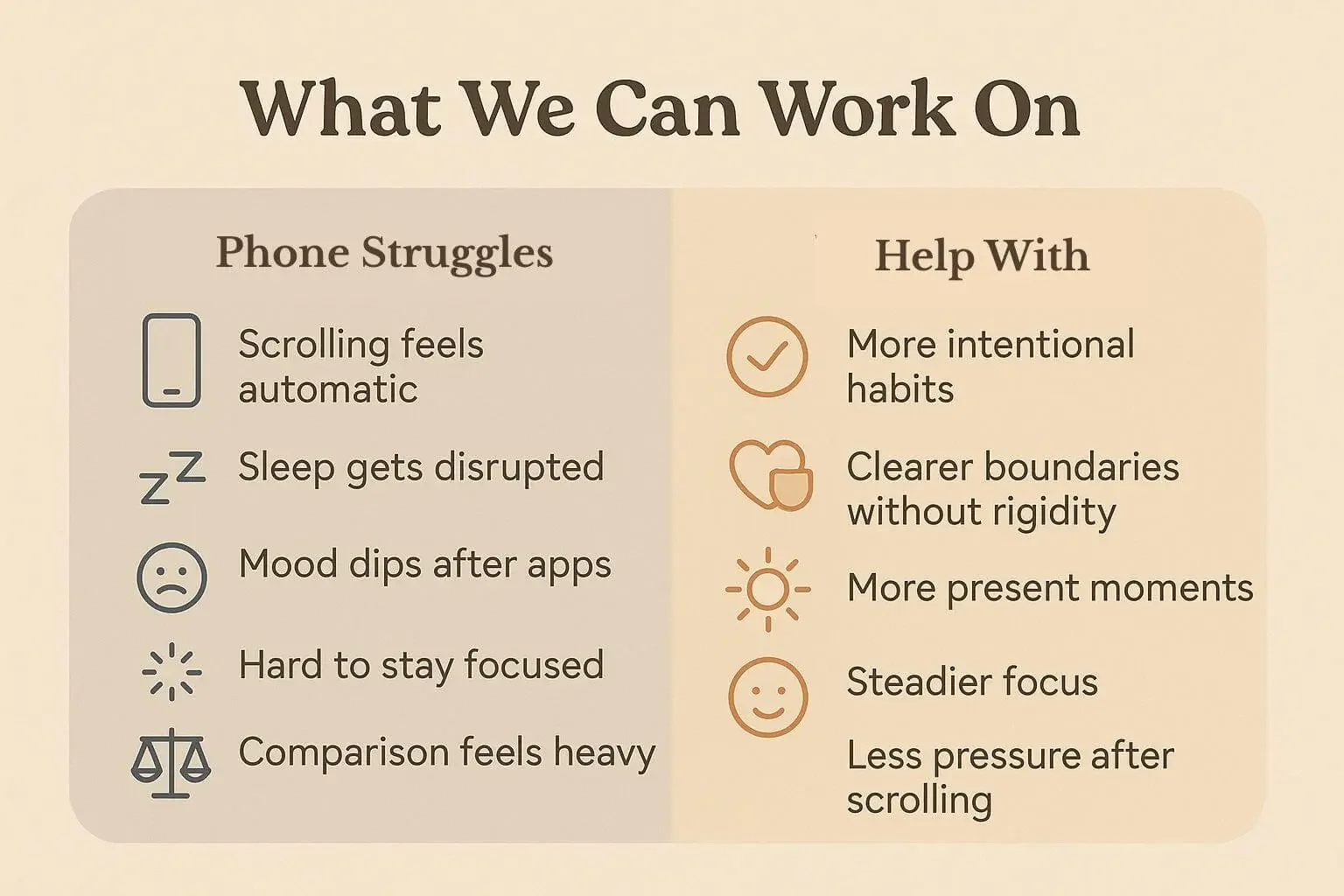
How Screens and Social Media Addiction Therapy Supports Balance
When I work with people around social media overuse, therapy isn’t about forcing rigid limits or taking your phone away.
We start by understanding what your screen use has been doing for you and experiment with small, realistic shifts rather than trying to quit everything at once.
From there, we explore small, meaningful shifts that feel realistic — things like creating steadier rhythms, navigating overwhelm, or finding ways to feel more grounded and focused.
Many people share that once they understand their patterns with more clarity, the urge to scroll begins to feel less automatic and more manageable.
I offer support for screen and social media overuse to clients across Florida, both in Gainesville and statewide via telehealth.
If you’re curious about pricing or scheduling, you can explore that below.
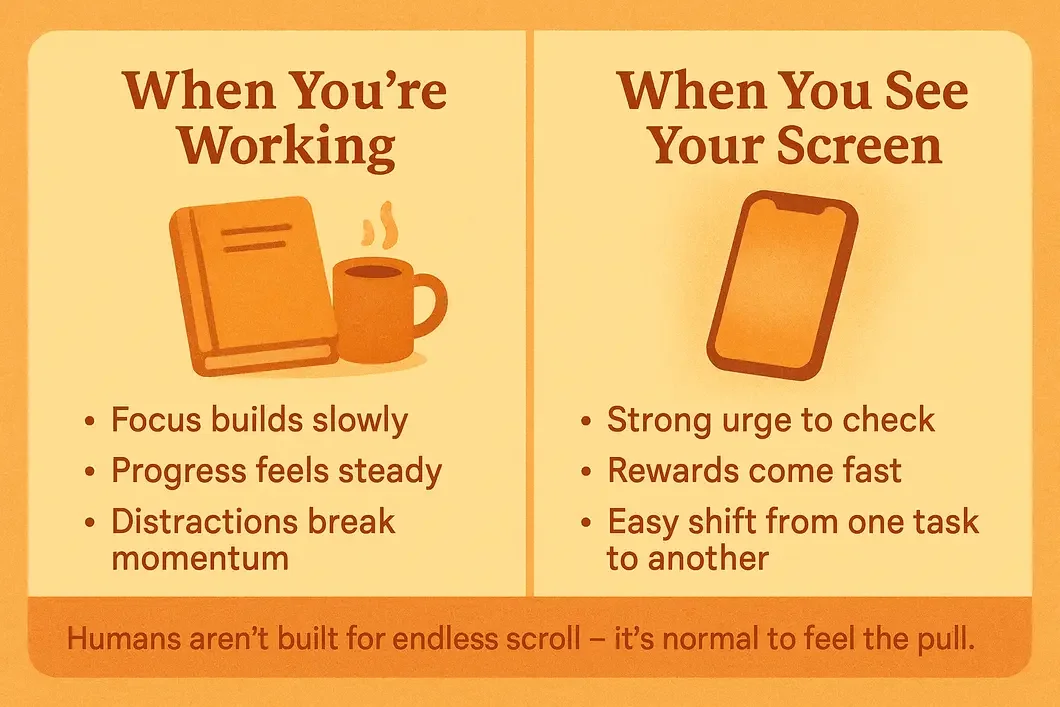
The Pull of Endless Scroll and Difficulty Focusing
In sessions, I often hear people describe checking one thing and suddenly realizing thirty minutes have slipped by.
The endless scroll is built to keep moving, and the fast stream of stimulation makes stopping feel surprisingly hard. This isn’t a discipline issue — it’s a very human response to a system designed to hold your attention.
Notifications add another layer. Even small pings or vibrations can create a sense of being constantly “on call,” pulling focus away from moments you want to be present for.
Many people notice that screens can bring short-term relief while quietly increasing anxiety over time.
If this sounds familiar, you’re not alone. These patterns often overlap with stress, attention difficulties, or overwhelm. Therapy can help you understand what’s happening and build steadier, more intentional focus.
Why Social Media Can Feel Connecting, Lonely, and Comparative All at Once
I see this tension come up often in my work with adults navigating social media use.
Social media can offer quick moments of connection — a message, a like, a shared joke — yet still leave you feeling lonely or unsettled afterward.
Curated posts and highlight reels add another layer. Even when you know they’re selective, they can still trigger comparison. It’s normal to feel a dip in mood, energy, or confidence or a sense of falling behind.
Some people find it helpful to look at common patterns of screen overuse, without needing to label it as an addiction.
Noticing these patterns is a meaningful first step. It can help you make sense of the emotional pull of screens and build gentler, more intentional rhythms with your phone.

What to Expect in the First Session
Whether you are here for social media addiction therapy, or just want a better relationship with your screens, first sessions follow a simple pattern.
I try to make the first session feel calm, nonjudgmental, and practical, especially if talking about screen habits feels vulnerable.
Here’s what it usually looks like:
Gently exploring what’s been going on
We talk about your screen habits, nighttime rhythms, and the feelings or pressures behind them. You can share at whatever pace feels right.Noticing what you want from support
You don’t need a clear goal. We explore whether you want to cut back, feel more present, or simply understand the pattern.Finding a rhythm that fits your life
We shape a plan that feels realistic — small steps, flexibility, and changes that don’t feel overwhelming.
Some people feel relief simply having space to talk about their habits openly.
Others take time to warm up. Either pace is completely okay.
A Gentle Invitation
If you’d like support with shaping healthier screen habits or feeling more in control of your time and attention, you’re welcome to explore pricing and scheduling whenever you’re ready.
Quick FAQs
Do I have to quit using my phone or social media completely?
No. You decide what balance looks like. Many people want screens to stay in their life, just with less exhaustion or overwhelm.
How do I know if my screen use is becoming “too much”?
If it’s affecting sleep, motivation, mood, or meaningful parts of life, support may help. You don’t need a diagnosis to reach out.
What if scrolling is my main coping tool?
That’s very common. Therapy can help you build additional ways to feel grounded and connected so it isn’t the only place that feels good.
Can we talk about ADHD, difficulty focusing, or burnout?
Yes. These patterns often overlap, and we can explore them gently and at your pace.
Is it okay if I only want a few sessions?
Absolutely. Some people come for short-term clarity. Others prefer ongoing support. You choose what feels right.
How does therapy help with social media addiction?
Therapy sessions often explore the effects of social media use, patterns around time spent, and ways to respond to the urge to use social media. Cognitive behavioral therapy (CBT) is sometimes used when treating social media addiction, with treatment options focused on reducing negative effects rather than complete abstinence.