How Phone and Screen Use Can Increase Anxiety (and What Helps)
Many people notice that their anxiety feels worse alongside heavy phone or screen use.
If you are looking for clarity, context, and gentler ways of responding to anxiety in a highly stimulating world, this article is meant to help.
I support many adults who notice anxiety and screen use becoming intertwined. If you’d like, you can learn more about scheduling here.
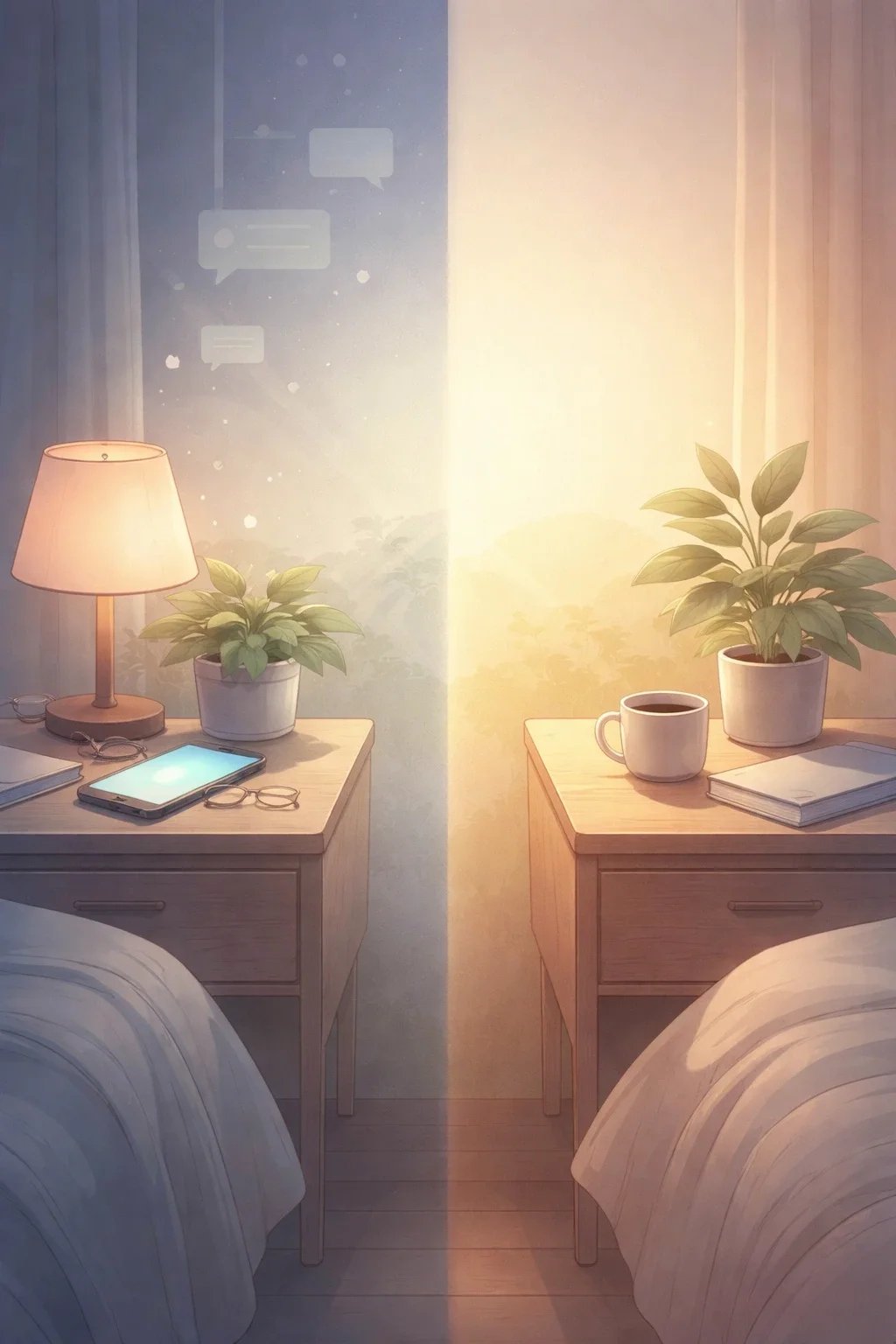
What this article aims to do
Its goal is to help you:
Understand how phone and screen use can interact with anxiety.
Recognize common patterns without self blame.
Notice what supports your nervous system in a highly stimulating environment.
Explore gentler ways of responding, rather than trying to fix yourself.
Anxiety, stress, and stimulation
Many people reach for their phone or a screen to relax, unwind, or take a break, only to notice that they feel more tense, restless, or overwhelmed afterward.
Anxiety and stress both involve a state of heightened alertness. The mind stays focused on what might go wrong, what needs attention, or what feels unfinished, while the body remains slightly activated even during rest.
In a highly stimulating environment, that alert state can be harder to turn off. Phones and screens add constant input through notifications, updates, and social signals, which can quietly keep the nervous system engaged.
This means that when anxiety or stress is already present, constant stimulation can make it more difficult for the body to settle, especially within broader patterns of technology overuse.
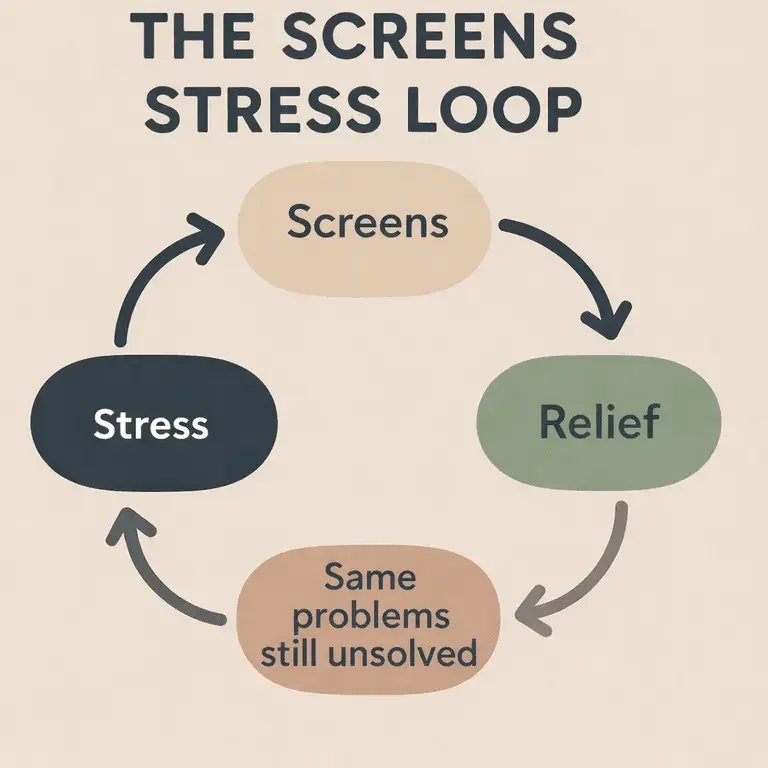
The Screens and Stress Loop
For many people, this pattern shows up most clearly in everyday phone, screen, or social media use.
This often works in the short term.
Scrolling can distract from worry.
Messages can provide reassurance.
Videos can offer comfort or escape.
The challenge is that distraction does not always equal regulation.
If the body never fully settles, anxiety may return once the screen use stops.
Many people notice a familiar pattern:
Anxiety or Overwhelm→ Phone or Screen Use → Brief Relief → Guilty Feeling / Same Problems Still Exist → More Anxiety
Over time, this can show up as mental fatigue, trouble focusing, sleep disruption, or a sense of always needing more stimulation, which can make reaching for the phone feel even more automatic.
How to use this insight
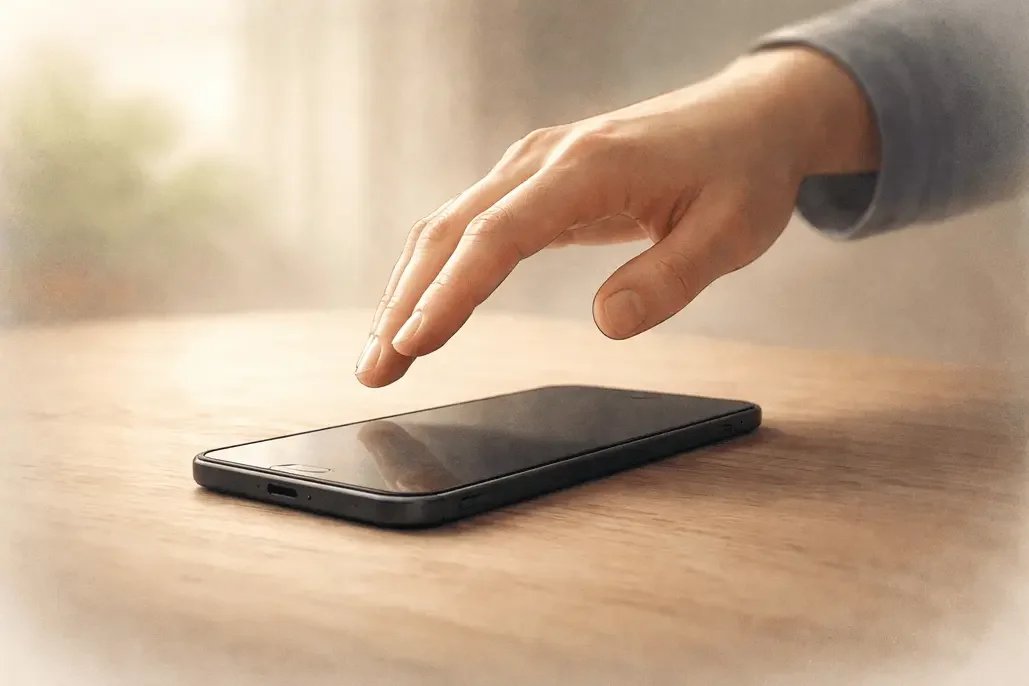
When you reach for your phone, it can help to ask a simple question:
Am I using this to cope with something that feels overwhelming right now?
If the answer is yes, the phone may be offering temporary relief from a problem that feels too big to face all at once. In those moments, the most helpful shift is often not less screen use, but making the problem feel smaller.
This might look like:
Naming what feels overwhelming instead of escaping it.
Writing a short list of what is actually on your mind.
Choosing a single next step rather than trying to resolve everything.
Many people find it helpful to respond with small, realistic shifts to screen time rather than trying to cut back perfectly or all at once.
This is not about removing the phone.
It is about giving yourself another way to meet overwhelm when it shows up.
How this shows up in everyday life
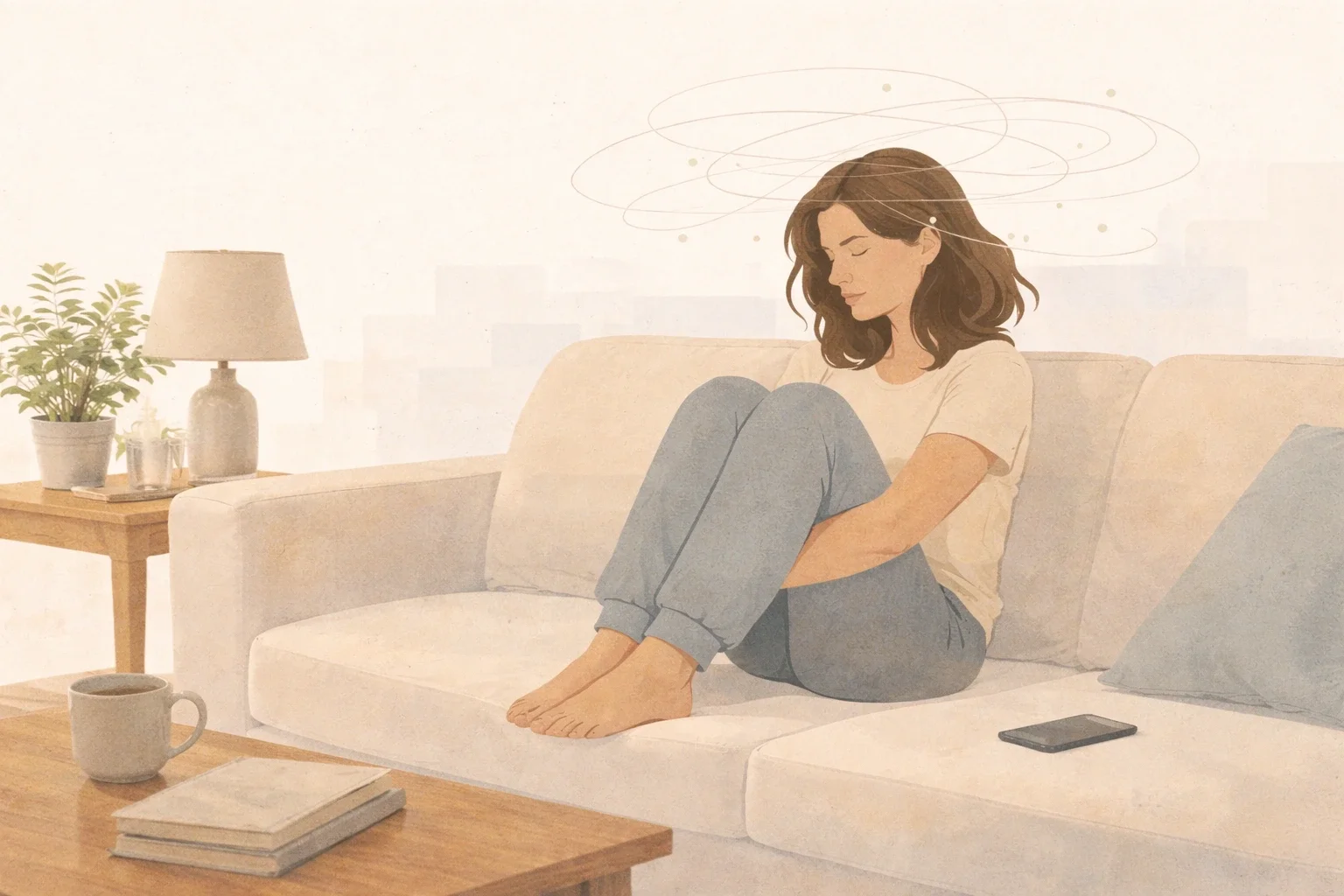
These patterns often show up quietly, woven into ordinary moments rather than dramatic changes. Some people recognize these as common patterns of screen overuse, without needing to label them as an addiction.
It might look like picking up your phone during small pauses in the day, not because you need anything specific, but because the moment feels slightly uncomfortable or unfinished.
Sometimes it shows up as mental tiredness after time on your phone, even when nothing stressful happened.
You might also notice that putting the phone away does not immediately bring relief. Instead, there can be a brief sense of restlessness, as if your mind is still looking for something to engage with.
Over the course of the day, this can turn into needing more stimulation to feel okay, reaching for the phone more often not out of interest, but out of habit or discomfort with quiet.
Nighttime use, sleep disruption, and morning anxiety
Sleep plays a major role in regulating anxiety. When sleep quality drops, many people notice that anxiety feels stronger or harder to manage the next day.
Phones can interfere with sleep in subtle ways. They can delay bedtime, keep the mind engaged, and reduce opportunities for mental quiet.
Over time, this can create a familiar pattern. Late night scrolling, lighter or fragmented sleep, and morning anxiety that feels out of proportion to what is actually happening. The anxiety may not come from anything new, but from a nervous system that did not fully reset overnight.
Why winding down matters
For many people, the time before sleep is when the mind naturally processes the day. Thoughts, emotions, and unfinished moments begin to settle when stimulation decreases.
When that space is filled with constant input, there may be less opportunity for that processing to happen. This can make it harder to fall asleep, or lead to waking with a sense of unease or mental noise.
This does not mean you need a perfect bedtime routine. It simply highlights the value of leaving some quiet space at the end of the day so the nervous system can shift out of alert mode and prepare for rest.
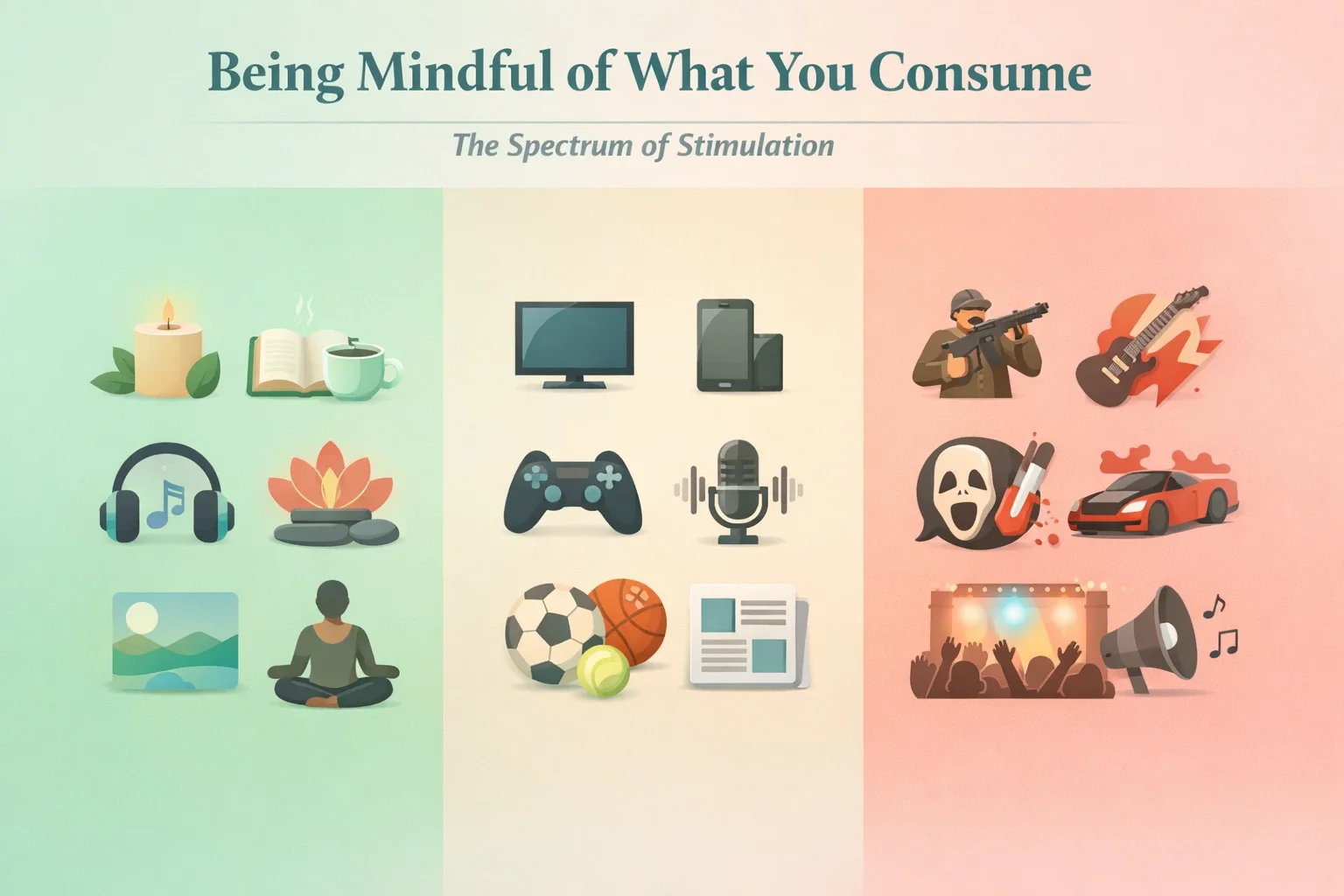
Being mindful of what you consume, not just how much
When anxiety is high, the nervous system is often more sensitive to what kind of stimulation it takes in, not just how long you are on a screen.
Some content is naturally activating. Fast paced videos, emotionally intense news or rapid scrolling can feel engaging while quietly increasing tension.
This does not mean this content is bad. It means it may not match what your nervous system needs in that moment.
A helpful shift is to start mentally labeling different types of stimulation, rather than treating all screen use the same.
You might think in terms of:
Calming or settling input
Content that is slower, familiar, predictable, or steady.
Examples include a calming playlist, a familiar show, a gentle podcast, or music without sharp changes.Neutral or background input
Content that keeps you company without demanding much attention.
Examples include instrumental music, low volume audio, or something you have already seen before.Activating or energizing input
Content designed to stimulate, excite, or provoke emotion.
Examples include intense videos, fast cuts, emotional news, competitive content, or loud music.
Checking in can help you decide whether the stimulation matches your current state. If you already feel keyed up or overstimulated, choosing lower intensity input can make it easier for the body to settle.
This can also include reducing stimulation rather than stopping completely. Lowering the volume, switching from video to music, or taking a few minutes without any input at all can help the nervous system reset.
Some people find it useful to prepare intentional options ahead of time, such as a calming playlist or a short list of shows that feel grounding. Having these ready can reduce the urge to scroll endlessly when anxiety is already high.
This is about matching stimulation to what your nervous system needs right now, and allowing that need to change throughout the day.
A supportive way of thinking about change
Helpful changes are often small, flexible, and responsive, rather than strict or all-or-nothing.
Instead of banning screens, many people find it more helpful to:
Notice activation rather than ignore it.
Adding a 30 second pause to breath before and after use.
Distinguish between soothing and stimulating use.
Protect wind-down time at night.
Have a few non-screen ways to help the body settle.
These are not rules to follow.
They are ways of orienting yourself toward what supports your nervous system.
The goal is not control.
It is learning how to respond to what your nervous system needs in that moment.
When understanding is not enough
For many people, learning about these patterns brings relief. Things start to make more sense, and self blame softens.
Sometimes, though, understanding does not immediately change how anxiety feels. The pull toward screens can still show up during stress, exhaustion, or overwhelm, even when you know what is happening.
If that is your experience, it does not mean you missed something in this article or failed to apply it correctly. It often means your nervous system needs more support than insight alone can provide.
For people whose anxiety feels persistent or overwhelming, therapy can offer additional support beyond insight alone. Not by forcing change, but by offering space to slow down, notice patterns together, and build steadier ways of responding when anxiety is high.
About the Author
Joseph Brooks has a Master’s in Clinical Mental Health Counseling and is a Registered Mental Health Counselor Intern in Florida who works with adults experiencing anxiety, overwhelm, and difficulty regulating technology use in a highly stimulating world.
His approach is collaborative, non-judgmental, and focused on helping people understand their patterns and build steadier ways of responding to stress, rather than relying on willpower or rigid rules.
If anxiety and screen use feel tangled together for you, therapy can offer a supportive space to slow things down and work through it at your own pace. You’re welcome to learn more about scheduling or reach out with questions when you’re ready.
Frequently Asked Questions
Does this mean I need to reduce my screen time to feel less anxious?
Not necessarily. For many people, anxiety is influenced more by how and when screens are used than by total time. This article focuses on noticing patterns and supporting the nervous system, not setting limits or rules.
Why do screens help in the moment but make anxiety feel worse later?
Screens can provide quick distraction or comfort, which can lower anxiety temporarily. Sometimes, though, the nervous system stays activated underneath. When the screen use ends, that unresolved activation can show up as restlessness, tension, or worry.
If I understand these patterns but still struggle, does that mean I’m doing it wrong?
No. Understanding patterns does not automatically change how anxiety feels. Many people need additional support to slow things down, process stress, and build steadier ways of responding when overwhelm shows up.