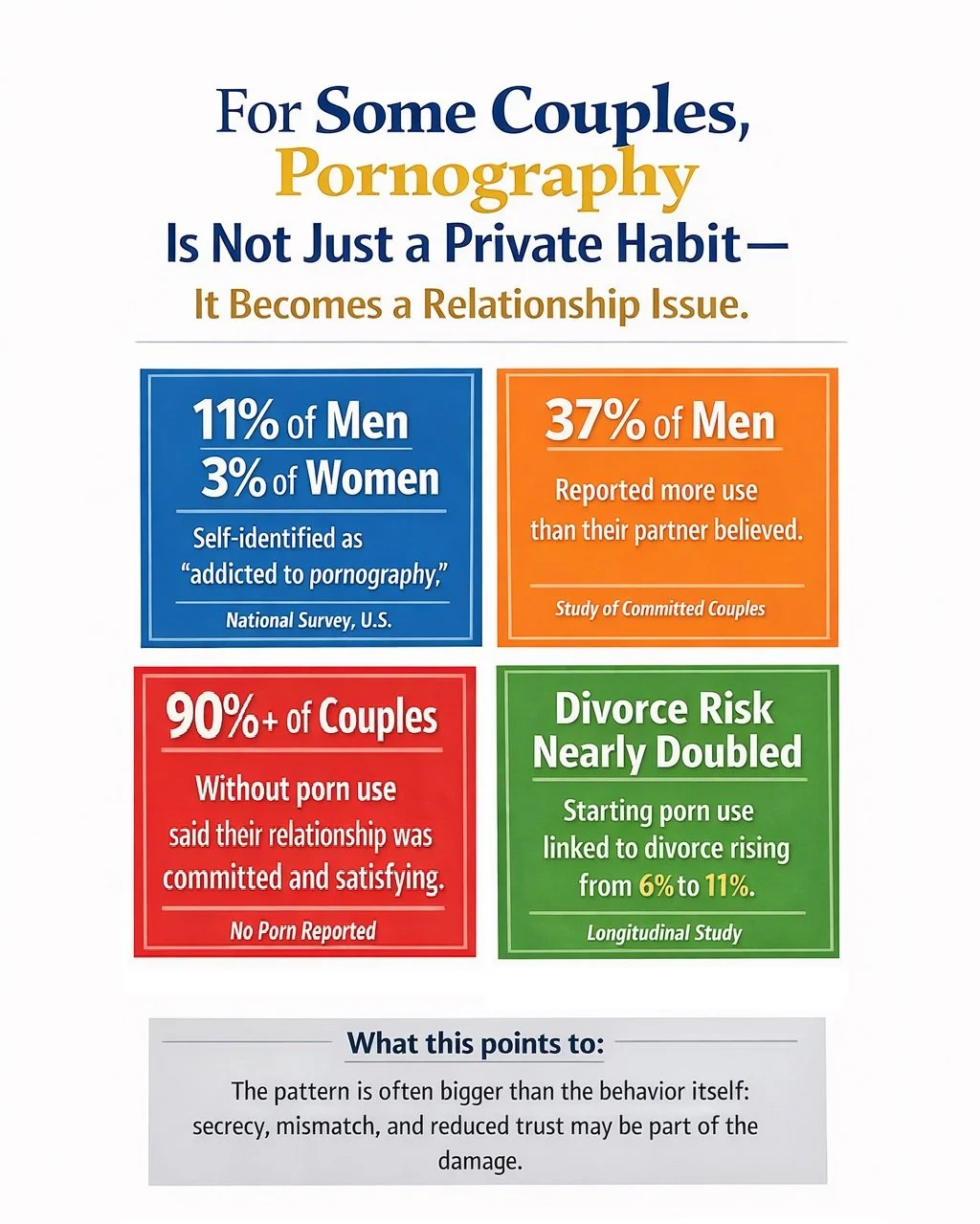
What Research Suggests About Porn Use and Relationships
If porn is affecting your relationship, you are not alone.
Taken together, these studies suggest that pornography can become more than a private behavior for some individuals and couples. The pattern may involve self-identified loss of control, mismatched partner awareness, lower relationship quality, and higher relational strain over time. These findings do not mean every user or every couple will have the same experience, but they do suggest the issue can affect trust and relationship stability, not just sexual behavior alone.
Sources: Grubbs et al. on self-reported addiction; National Couples and Pornography Survey 2021; Institute for Family Studies summary on partner-awareness gaps; American Sociological Association summary of the divorce finding.
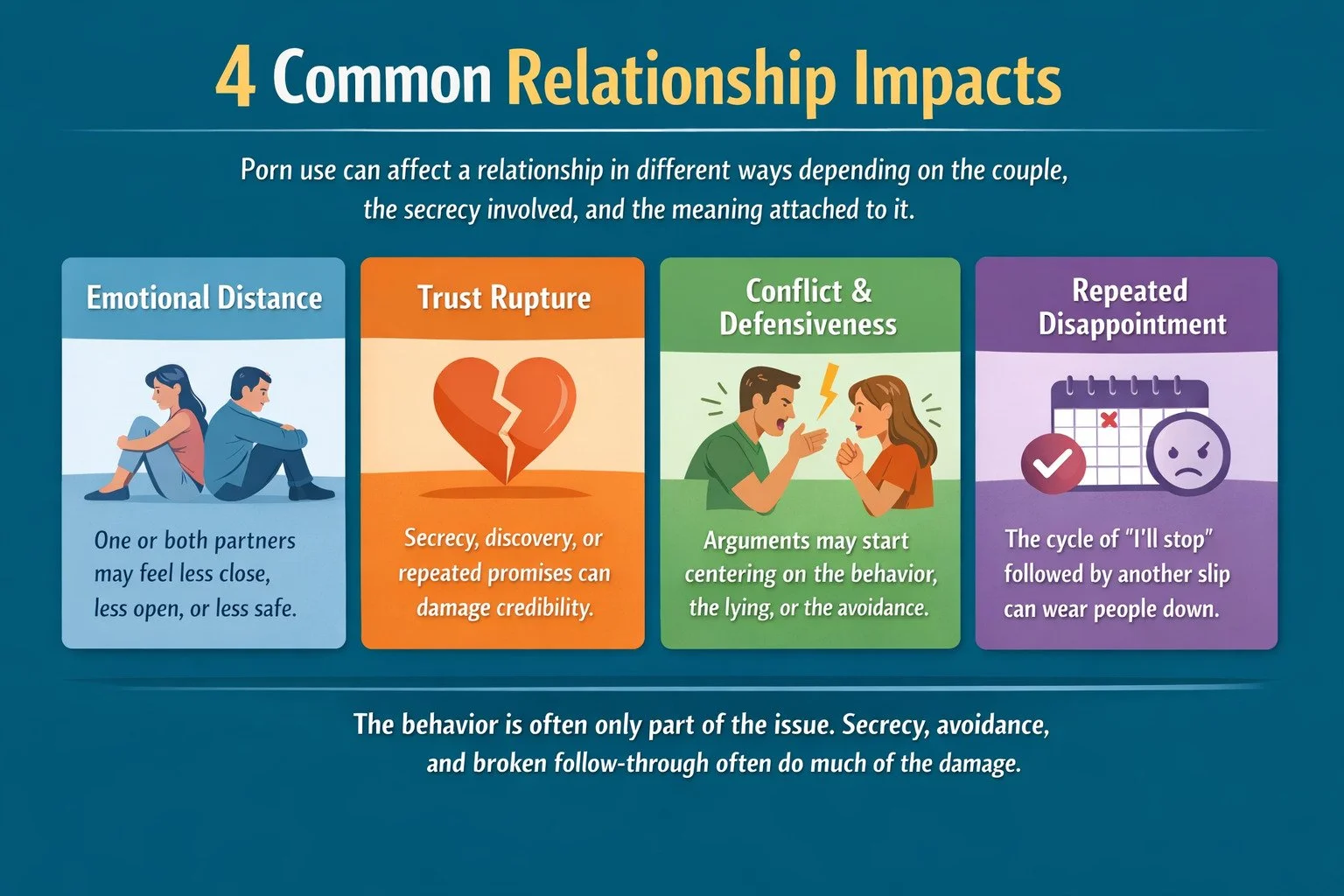
How Porn Affects the Relationship
For some couples, the damage is not only about the viewing itself. The bigger relationship strain often shows up through emotional distance, secrecy, defensiveness, and repeated broken follow-through. Research in this area suggests that pornography-use patterns can overlap with lower relationship quality, especially when the use is hidden or mismatched between partners.
Source: National Couples and Pornography Survey 2021; Lawless et al.; Maas et al. — studies have linked some pornography-use patterns with lower relationship stability, commitment, satisfaction, secrecy, and betrayal concerns.
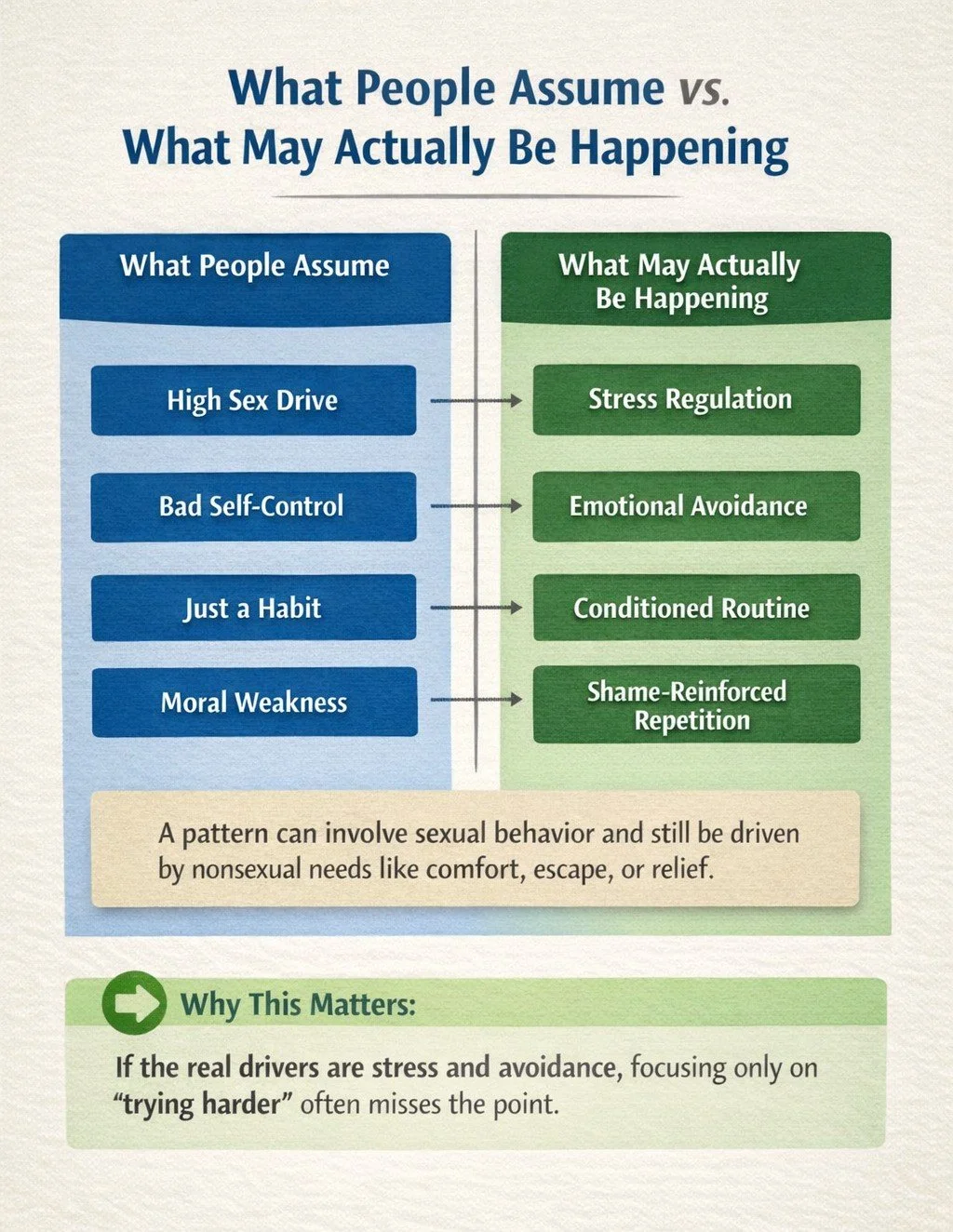
It Is Not Always Just About Sex Drive
Repeated porn use is often framed as “high sex drive” or “bad self-control,” but that can miss the fuller picture. Research suggests that for some people, the pattern is also tied to stress regulation, emotional avoidance, loneliness, and conditioned routine. If those are the real drivers, simply telling someone to “try harder” may not address what is keeping the cycle alive.
Source: Cardoso et al., Journal of Sexual Medicine; Vescan et al. — studies have linked problematic pornography use with stress, loneliness, and emotional-regulation difficulties.
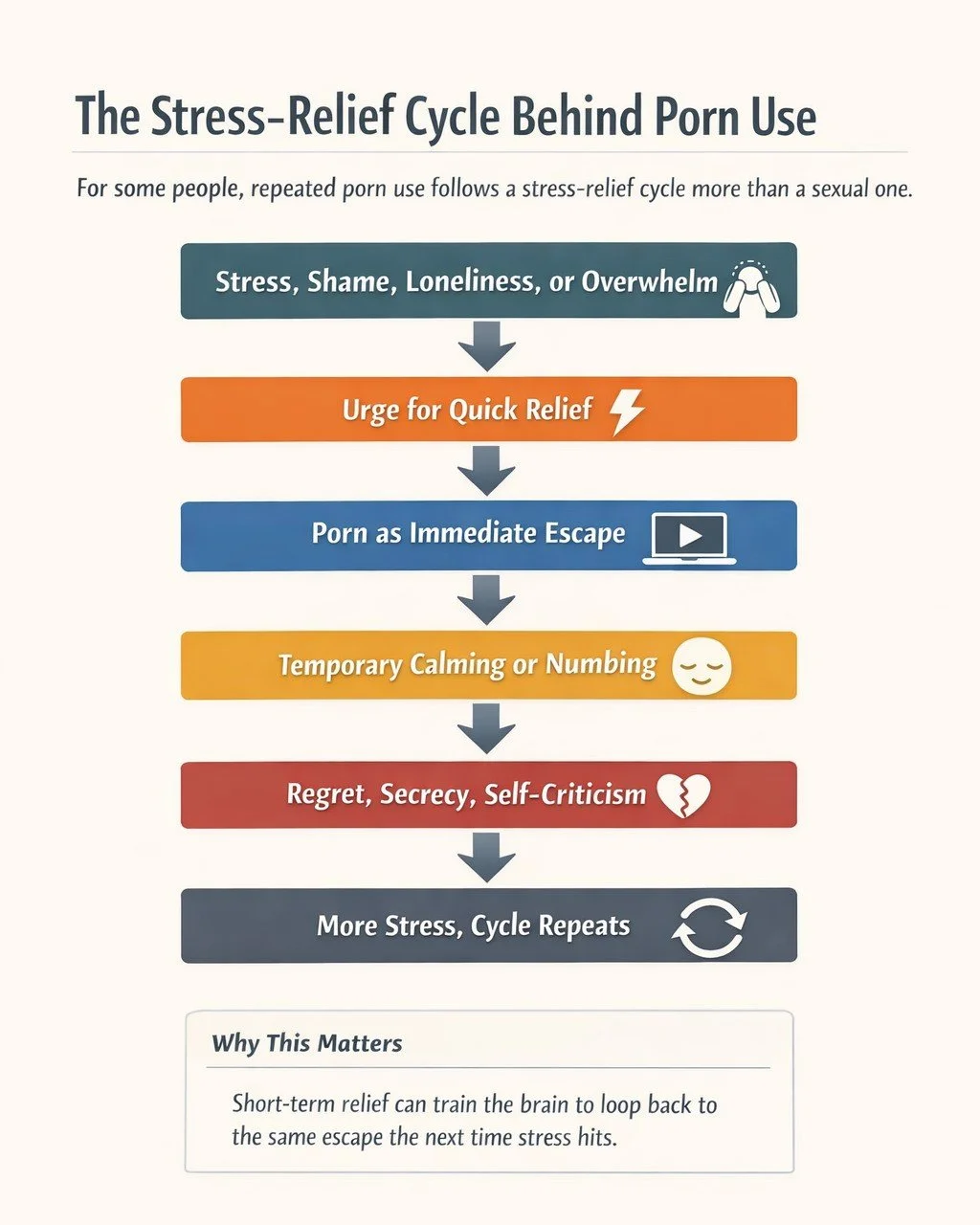
The Stress-Relief Cycle
For some people, porn use is not driven only by sexual desire. Research suggests that stress relief, emotional avoidance, loneliness, and difficulty regulating uncomfortable feelings can all become part of the pattern. That helps explain why the behavior may feel calming in the moment, then return again when stress rises later.
Source: Cardoso et al., Journal of Sexual Medicine — problematic pornography use was positively linked with emotion-regulation difficulties, loneliness, and perceived stress.
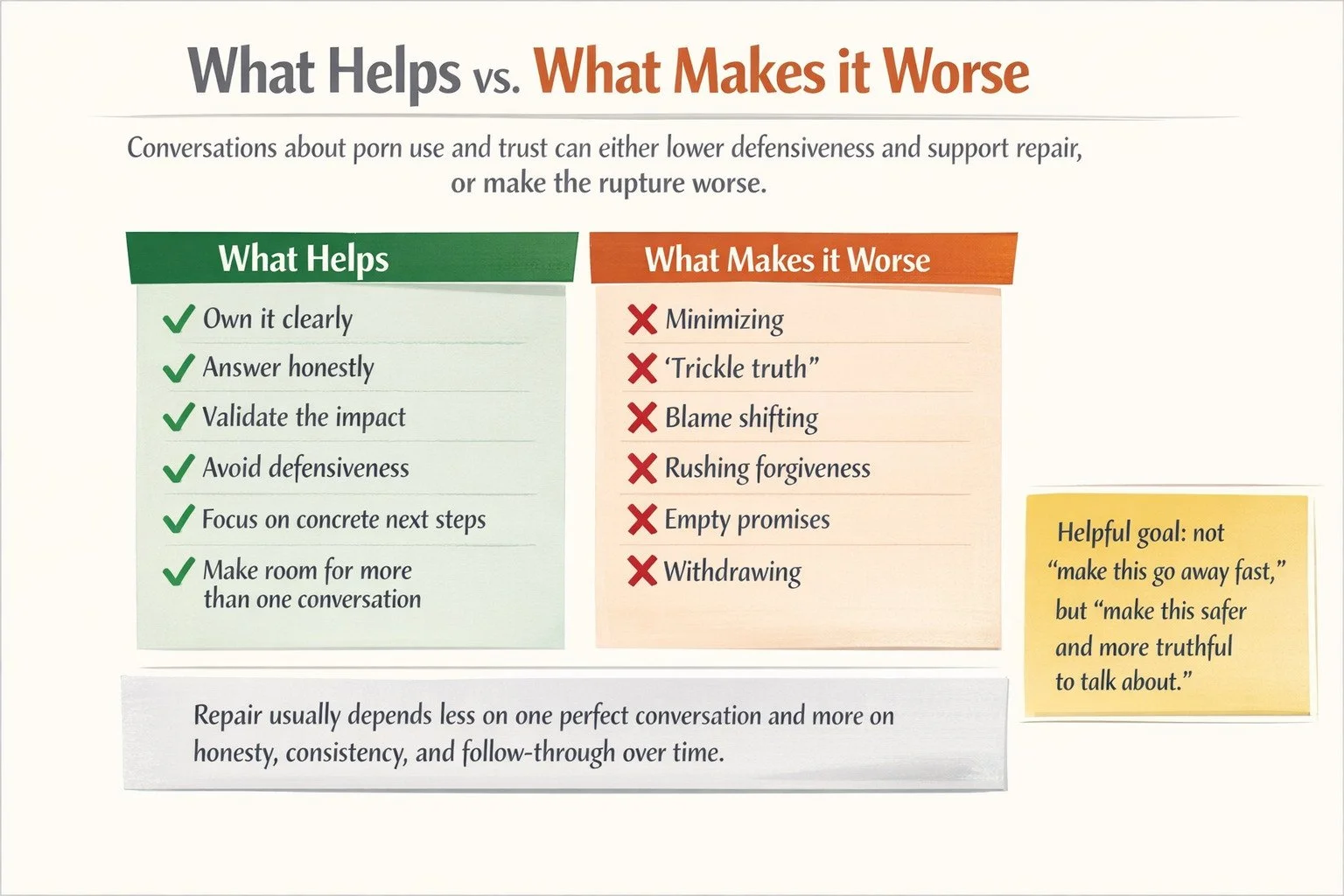
What Can Help in Conversations
When trust has been hurt, the conversation usually matters almost as much as the behavior itself. Secrecy, minimizing, blame shifting, and half-truths tend to make repair harder. Clear ownership, honest answers, validation of the impact, and consistent follow-through give a couple a better chance of moving toward safety and repair over time.
Source: Lawless et al.; Vaillancourt-Morel et al. — research on secrecy, betrayal, partner knowledge, and relationship quality suggests disclosure and honesty matter.
A Final Note
These graphics are not meant to say that every porn user has the same experience or that every couple is affected in the same way. They are meant to show a few patterns that often matter: stress relief, secrecy, emotional distance, and the role of honesty in repair.
About the Author: Joseph Brooks is a counselor who specializes in Porn Addiction Therapy in Florida.