Video Game Addiction Therapy in Florida
Is gaming starting to feel less like fun and more like something you can’t fully control?
I work with both teens and adults.
Counseling to help you:
Regain Self Control
Improve productivity
Feel less anxious
Build a fuller life outside the screen
If you are a loved one is struggling, feel free to reach out to me at 352-234-6723.

Who This Is For
Gaming itself is not the problem.
This work is for a specific group of people who notice that gaming has started to create real costs in their life.
Some common things I hear from clients:
“I am falling behind and I know this is part of it.”
“I often procrastinate on things outside of games.”
“I do not like who I become when I am stuck in this loop.”
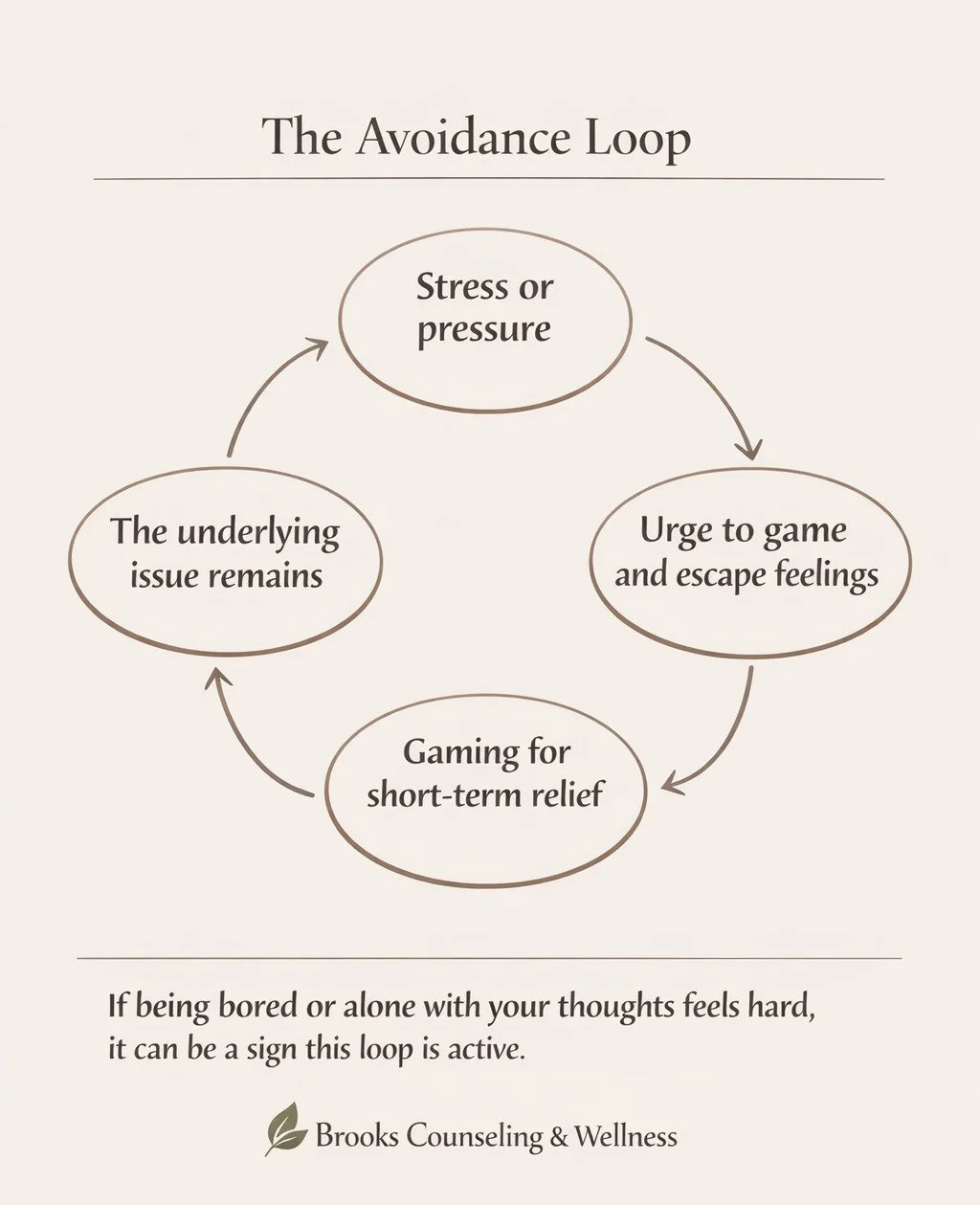
Often times my clients notice a loop based around escape and avoidance in there lives.
What therapy helps with
This may be a good fit if you recognize some of the following patterns:
Gaming has become your main way to escape or avoid real-life problems.
You struggle to stop even when you mean to.
Motivation drops outside of games, procrastination increases
Increased social anxiety and isolation
Real life starts to feel flat or meaningless compared to gaming
Higher depressive symptoms and anxiety

What We Focus On in Gaming Addiction Therapy
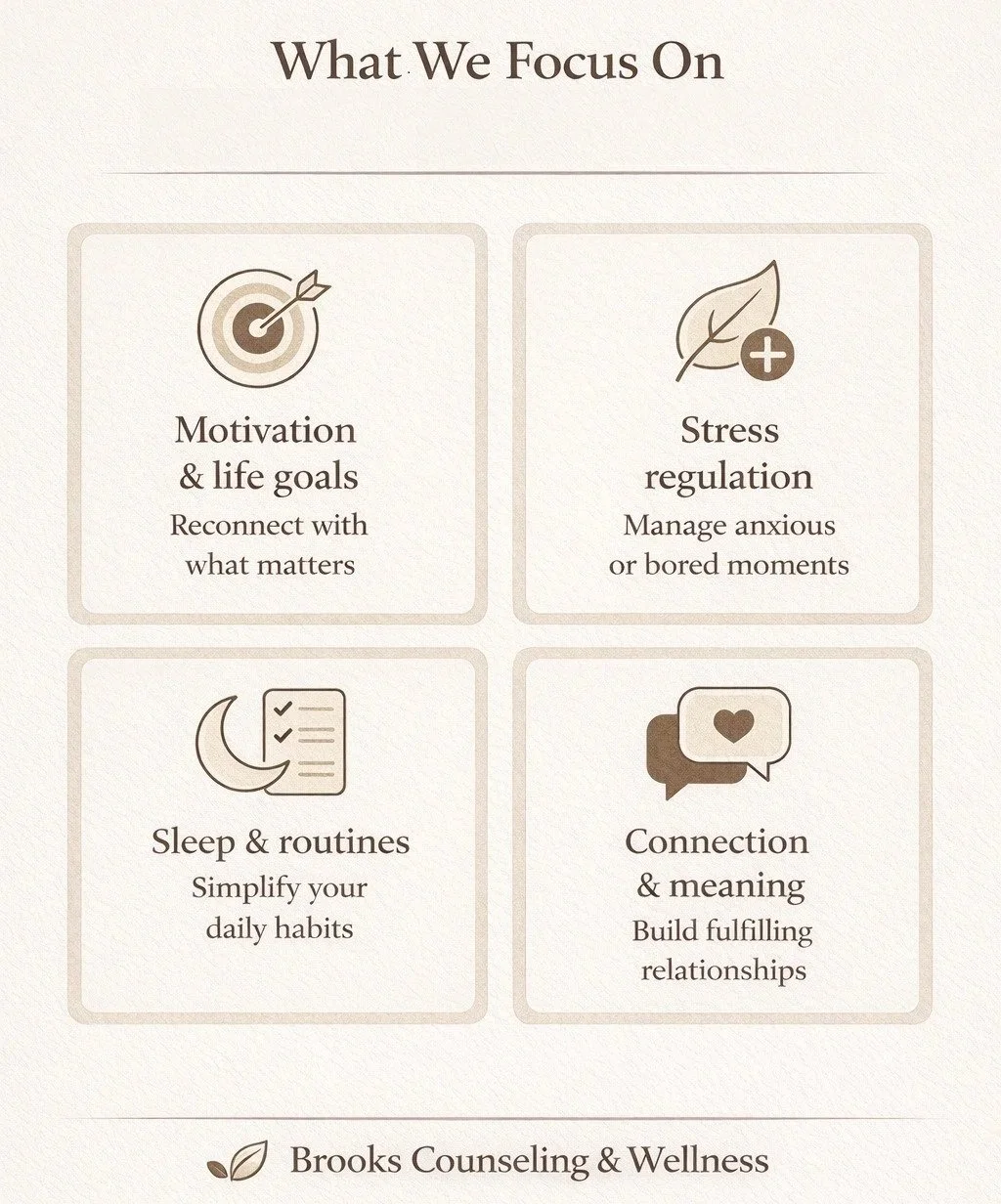
Some people want to quit entirely. Others want to just reduce gaming and regain balance. I support people with both goals, whether you feel addicted or just stuck in a habit that no longer feels healthy.
Focus Areas:
More motivation and follow-through
Feel more in control around gaming
Reduce stress and anxiety in real moments
Better sleep and healthier routines
Build healthier relationships
More goals, clarity, and a better day-to-day life
The goal is to build skills you can use on your own so you feel confident creating a fulfilling life, with gaming as a healthy choice rather than a coping trap.
A note from Joe:
I’m glad you found your way here.
I also want you to know you’re not alone in this. I struggled with video game addiction for most of my life until I finally got the right support.
That journey helped change my life— leading me down this current path to specialize in helping people in similar situations.
More on how I work:
A nonjudgmental alliance with accountability
A consistent place to be honest, track patterns, and reset quickly when you get off track.
Evidence informed, skills based approach
Practical tools you can use under stress, not just insight that makes sense on a good day.Self improvement, not just “stop gaming”
Small weekly experiments and routine changes so progress continues outside the therapy room.

Joseph Brooks, MA, RMHCI
Founder and Owner, Brooks Counseling & Wellness
Master of Arts in Clinical Mental Health Counseling
Florida registration status: Active
Clear Through: 10/2030
Registered Mental Health Counselor Intern (IMH28583)
Supervised by Jorelle Degen, LMHC (MH14882)
Florida Board of Clinical Social Work, Marriage & Family Therapy, and Mental Health Counseling
How Therapy Helps With Video Game Addiction
Problematic gaming is rarely just about the game itself.
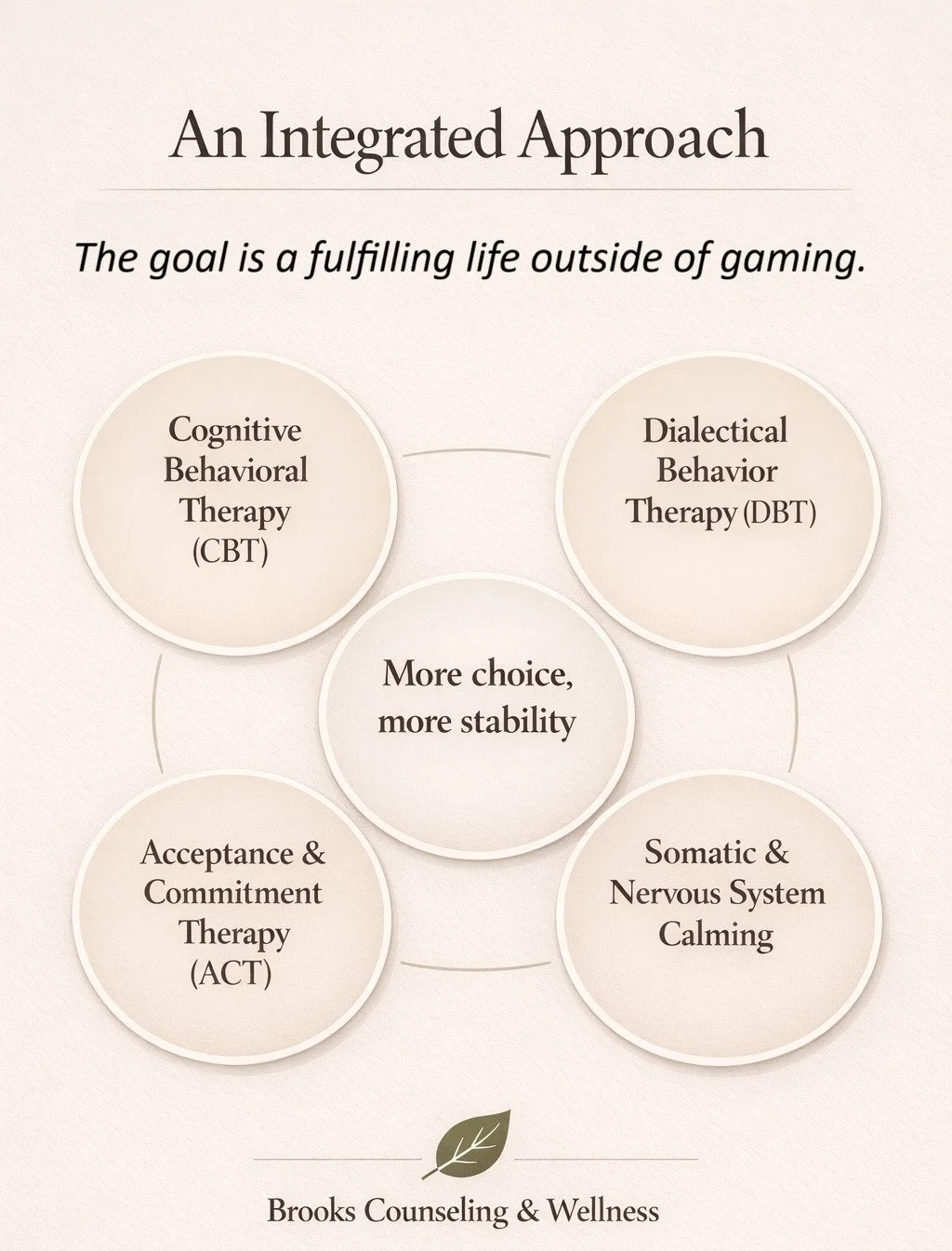
Because of this, I use an integrated approach that focuses on skills, nervous system regulation, and practical behavior change rather than insight alone.
Specific modalities I use:
-
CBT is one of the most researched approaches for problematic gaming and related behavioral habit loops. Research reviews suggest CBT can reduce gaming-disorder symptoms and can also help with related mood symptoms in some studies.
What we use from CBT
Identifying patterns that trigger gaming urges
Challenging all-or-nothing thinking and self-criticism
Breaking habit loops that link stress directly to gaming
Building realistic plans instead of relying on motivation alone
Benefits you may notice
More control over urges
Less guilt and shame after slip-ups
Clearer thinking under stress
Better follow-through on real-world goals
-
DBT was designed to build emotion regulation, distress tolerance, and behavioral control skills, especially when emotions run high. Those skills can be directly relevant when gaming is being used as an escape from overwhelm or intense mood states.
What we use from DBT
Emotion regulation skills for intense stress or overwhelm
Distress tolerance when urges feel urgent or uncomfortable
Impulse control tools for “just one more game” moments
Skills for anger, frustration, and emotional spikes
Benefits you may notice
Fewer emotional spirals
More ability to ride out urges without acting on them
Improved emotional stability
Less need to escape through screens
-
ACT emphasizes values aligned living, helping you build a better overall life rather than just fighting urges. Research suggests that struggling to suppress urges often backfires. By increasing psychological flexibility, urges lose their power over behavior and stop dictating how you live.
What we use from ACT
Values-based goal setting outside of gaming
Reducing the struggle with cravings rather than fighting them
Building meaning and direction in real life
Benefits you may notice
More clarity about what actually matters to you
Improved motivation rooted in values, not guilt
A stronger sense of direction outside of games
-
Gaming often soothes an overactivated nervous system. Somatic approaches help address the body-level stress that drives the urge to escape in the first place. By managing overwhelm it becomes easier to have self control and build a life you want.
What we use from somatic approaches
Tools to calm the nervous system in real time
Releasing tension stored in the body
Building tolerance for boredom and discomfort
Benefits you may notice
Less baseline tension and restlessness
Better stress recovery
Improved sleep and energy
Therapy for Video Game Addiction- What to Expect in the First Session
Sessions are 50 minutes and $100 per session self pay only, available in Gainesville or online across Florida.
During a First Session:
Explore what’s been going on
We talk about your gaming habits, late-night patterns, and the stress or pressure behind them. You can share at whatever pace feels right.Noticing what you want from support
You don’t need a clear goal. We explore whether you want to quit, cut back, or simply feel more balanced.Finding a rhythm that fits your life
We start shaping a plan that feels realistic — small steps, steadier routines, and changes that don’t feel overwhelming.
If you’d like support with quitting gaming, cutting back, or finding a healthier balance, you can easily book a session at a time that works for you.
Reviews
★★★★★
“Joe is a pleasure to work with and has a truly thoughtful and welcoming presence as a therapist. I would definitely recommend his services!”
— Emilie D.
★★★★★
“Joe is comfortable to be with and very helpful.” — Robert G.
★★★★★
It’s not always comfortable to talk to a stranger about your problems in life, but to be honest Joe is very easy to talk to and made it feel like a safe place to open up and put words together to address situations and problems in life. I definitely recommend him!
— Luccy R.
Quick FAQs
-
No. You decide what balance looks like. Many people want gaming to stay in their life — just without the exhaustion or late-night cycles.
-
If it’s affecting sleep, energy, motivation, or meaningful parts of life, support may help. You don’t need a diagnosis to reach out. Some people find it helpful to look at common patterns of gaming or screen overuse, without needing to label it as an addiction.
-
That’s very common. Therapy can help you build more ways to feel grounded and connected, so gaming isn’t the only place that feels good.
-
Many of my clients have ADHD or focus issues, and we can take time to understand them together.
-
You don’t have to be nearby to get help quitting gaming, I work with anyone located in Florida. Telehealth sessions are confidential, private, and flexible, so you can meet from home, your car, or any quiet space that feels comfortable.
-
Absolutely. Some people come for short-term clarity. Others prefer ongoing support. You choose what feels right.