ADHD and Trauma:
Why They Can Look Similar but Need Different Support

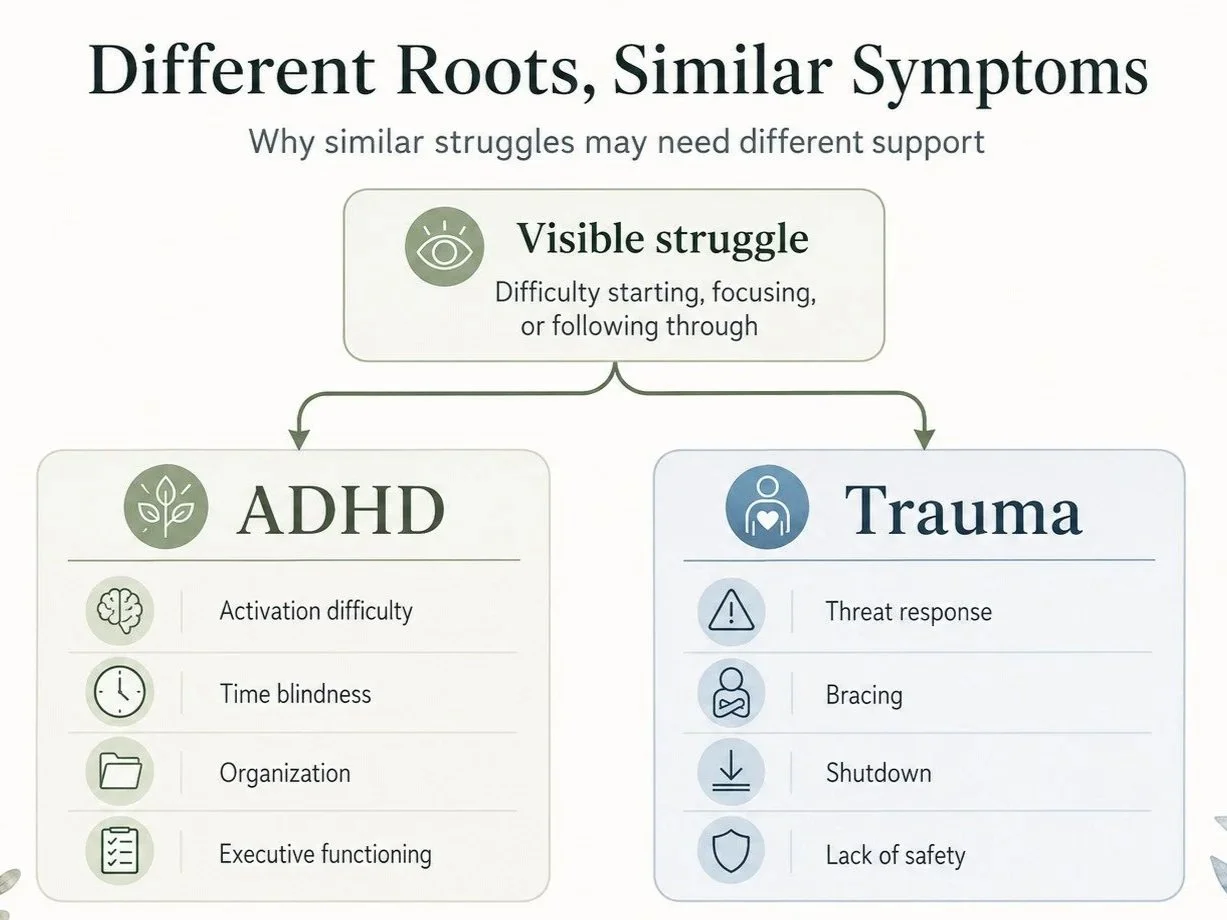
ADHD and trauma can look similar from the outside. Both can affect focus, emotional regulation, and follow-through. But similar symptoms do not always mean the same thing is happening underneath.
That distinction matters because the right support depends on what is driving the pattern.
This article will explain my general approach to understanding whether ADHD, trauma, or both may be part of the picture. It will also look at how each pattern may need different kinds of mental health work.
Why ADHD and Trauma Can Look Similar
ADHD and trauma can both affect a person’s ability to stay present.
Here is a simple way to understand the overlap:
Focus can be disrupted in both. ADHD may make it harder to hold attention, organize steps, or stay with a task. Trauma may pull attention toward threat or emotional danger.
Emotions can feel harder to regulate in both. ADHD can make emotions rise quickly and feel difficult to slow down. Trauma can make the body react as if something unsafe is happening now.
Avoidance can happen in both. ADHD avoidance may come from overwhelm or unclear steps. Trauma avoidance may come from the body trying not to feel something painful.
Research has also found overlap between ADHD and PTSD in areas like attention and emotional regulation.
Why It Can Be Hard to Tell the Difference
It is not always easy to tell whether concentration problems are coming from ADHD, trauma, or both. There is usually more than one clue to consider.
A more nuanced way to look at it is:
A symptom timeline can help, but it is not enough. ADHD often has a long developmental history. But trauma can also begin early, especially if the person grew up with chronic stress or emotional unpredictability.
Trigger information can help, but it may point to more than one layer. Trauma symptoms may spike around criticism, conflict, or feeling unsafe. But ADHD symptoms can also worsen under pressure, especially when the person already carries shame around falling behind.
How the body responds can help, but it needs context. Feeling tense, frozen, or shut down can be part of a trauma response. It can also happen when ADHD overwhelm builds past what the person can manage.
This is why I would not use one sign by itself to decide what is going on.
Questionnaires can help organize this information. ADHD screeners, trauma symptom measures, and adverse-life-event inventories can all provide useful clues. For example, the PCL-5 is one measure clinicians may use to assess PTSD symptoms.
But tools do not replace clinical judgment. The goal is not to force the person into one category. The goal is to understand what kind of mental health work would actually fit.
When ADHD May Be the Main Driver
ADHD may be more central when the pattern has been present for much of life and shows up across different settings.
The person may describe long-standing difficulty with activation, organization, or time. They may struggle even when they are not obviously triggered.
This might look like sitting down to start an ordinary task and feeling unable to begin. The task may not feel dangerous. It may not bring up a clear emotional memory. But the person still cannot get traction.
That pattern can overlap with ADHD task paralysis, especially when starting feels physically hard even before the person knows why.
They may lose track of time even on ordinary days. They may forget steps even when the task matters to them. That kind of repeated gap between intention and follow-through is often part of ADHD.
The person is not simply choosing not to care. They may be fighting with an executive functioning system that does not respond well to pressure or vague instructions.
If ADHD is the main layer, the focus may be on making life less dependent on urgency. In ADHD therapy, that can include clearer task structures, better pacing, and support for follow-through.
When Trauma May Be the Main Driver
Trauma may be more central when symptoms organize around threat, reminders, or a lack of safety.
The person may focus well in some situations but lose focus when conflict shows up. They may feel relatively steady until they sense disappointment, rejection, or emotional intensity.
Sometimes people do not know whether something “counts” as trauma. Not all trauma is remembered as one clear event. Some people grew up in environments where their needs were dismissed or home did not feel emotionally steady.
They may not describe their past as traumatic at first, but their nervous system may still carry the imprint of what happened.
A more useful question to explore is:
“How did your nervous system learn to respond?”
If someone learned to brace, disappear, or stay on alert, concentration may become difficult for reasons that go beyond ADHD.
If trauma is the main layer, the focus may not start with better planning. It may start with helping the person notice when their body feels unsafe and learn how to come back into the present.
In trauma-informed therapy, the work may include grounding, resourcing, or trauma processing when the person is ready.
A planner may help with organization, but it will not fully address a body that feels like it is still bracing for danger.
Why the Difference Matters for Treatment
ADHD and trauma can look similar, but they often need different kinds of support.
If ADHD is the main driver, therapy may focus more on structure, pacing, and executive functioning support. If trauma is the main driver, therapy may focus more on stabilization, body awareness, and memory processing.
If both are present, the work often needs to move carefully between the two. A simple treatment guide might look like this:
When ADHD is the main layer, build support around follow-through. This may include routines, task structure, and practical strategies that make daily life less dependent on pressure or urgency.
When trauma is the main layer, build safety before going deeper. This may include resourcing, grounding, and somatic awareness before trauma processing.
When both are present, stabilize first and treat the layers together. The person may need ADHD supports for daily functioning and trauma work for the fear or shame that makes those struggles feel unsafe.
My main goal is usually stabilization first. If someone is overwhelmed or outside their window of tolerance, it may not be helpful to push directly into intense trauma work. The person may need more capacity before approaching painful material.
The client’s goals matter in where we start as well.
Some people want to start with daily functioning. They want help with routines, tasks, and getting through the week. Other people know that a trauma layer is in the way and want to work more directly with it. Both starting places can be valid.
The important thing is that therapy is not forced into a rigid order. It should respond to the person’s readiness, symptoms, and goals.
What Stabilization Can Look Like
Stabilization means helping the person build enough steadiness to work with what is happening.
Stabilization may include:
Resourcing: This might involve a safe place image, a container exercise, or a comforting figure.
Somatic awareness: The person learns to notice tension, activation, or shutdown before it becomes overwhelming.
Co-regulation: Therapy itself can become a place where the nervous system learns what it feels like to slow down with another person.
These skills can help whether the main issue is ADHD, trauma, or both.
This is only a brief overview of EMDR resourcing, which focuses on safety, stabilization, and preparation before deeper processing.
Different Roots Need Different Support
ADHD and trauma can look similar, but they are not interchangeable.
When therapy can identify the pattern more clearly, support becomes more targeted.
For some people, it may involve both ADHD therapy and trauma-informed support over time. When both ADHD and trauma are part of the picture, both deserve to be understood.
About the Author
Joseph Brooks works with clients navigating ADHD, anxiety, trauma, and patterns of shame that can make daily life feel harder than it looks from the outside.
He offers both ADHD therapy and EMDR trauma therapy in Gainesville and telehealth across Florida.