Practical DBT Skills for ADHD Overwhelm
Learn practical, DBT-informed tools for ADHD overwhelm, emotional steadiness, and impulsive moments.
A Guide to Practical DBT Skills for ADHD
This article is a skills-focused guide. It’s meant to give you a few DBT-informed tools you can try during real-life moments of ADHD overwhelm, shutdown, and impulsive reactions.
It’s not a replacement for therapy, and it’s not a full DBT program. Think of it as a practical starting point: simple tools that are easier to remember when emotions are high.
About Me: I am a counselor specialized in providing DBT therapy for ADHD in Gainesville, Florida.
Why DBT Supports ADHD-Related Experiences
When you live with ADHD, the difficulties often involve more than attention or motivation. Many people describe challenges with frustration tolerance, impulsive reactions, emotional swings, or difficulty calming down once overwhelmed.
DBT is built for these moments. Skills are short, memorable, and practical — something you can reach for at home, school, work, or during stressful transitions.
Many clients describe DBT skills as “tools I can actually remember when things are intense.”

How These Skills Help ADHD Moments
With ADHD, overwhelm is often not a lack of knowledge. It’s a loss of access. You can know what helps and still feel like you can’t reach it in the moment.
These tools are often used to:
Create a brief pause during urgency or impulsive urges
Lower intensity when emotions spike
Reduce shutdown and “I can’t do anything” moments
Step out of shame spirals and harsh self-talk
Recover faster after a stressful interaction or mistake
In practice, tools like these are often integrated into adult ADHD therapy to help with emotional overwhelm, impulsive reactions, and recovery after stress.
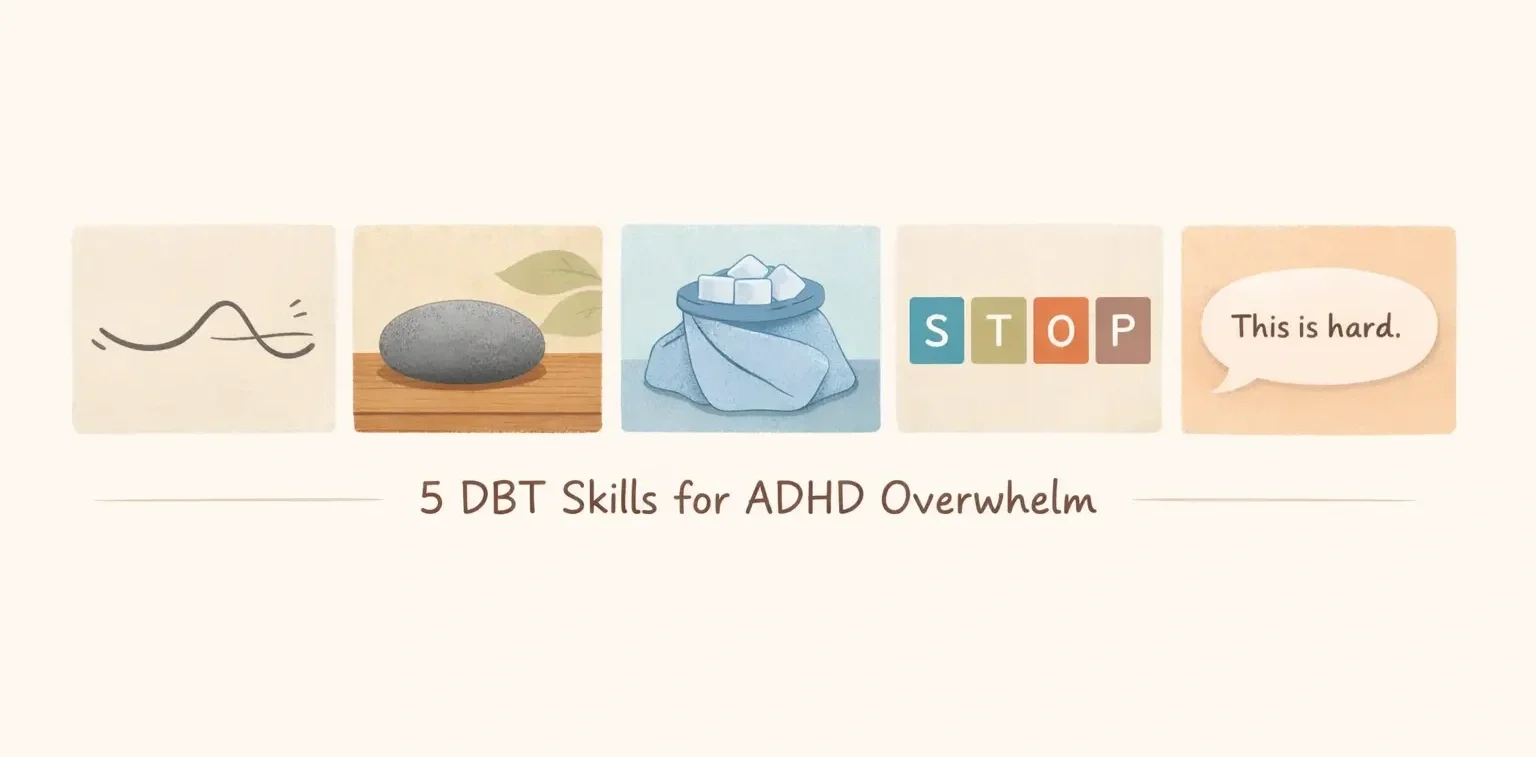
5 DBT Skills for ADHD Overwhelm
These are short, practical tools often used during real-life ADHD moments like emotional spikes, shutdown, or impulsive urges.
If you want to try them on your own, you can choose one skill and use it for a few days whenever you first notice overwhelm starting. Consistency matters more than doing them perfectly.
1. Slow Exhale Reset
A steadying option for tension, urgency, or strong emotion.
Try a slightly longer exhale than inhale.
For example: inhale for 4 seconds, exhale for 6 seconds.
Most people try this for 30 to 90 seconds, or about 5 to 10 slow breaths.
For many, slowing the exhale can help the body feel a little more settled, even if the emotion itself doesn’t disappear.
When it fits: irritation building, tight chest, everything feels rushed.
Why people use it: a small decrease in intensity or urgency, not full calm.
Common snag: expecting instant relief. Look for a subtle shift instead.
If it feels overwhelming
If this starts to feel uncomfortable or overwhelming, it’s okay to pause or stop. Skills are meant to support you, not push you past your limits. You can return to it later, or choose a different tool that feels steadier in that moment.
2. Single-Object Grounding
A grounding option for spirals, panic sensations, or feeling disconnected.
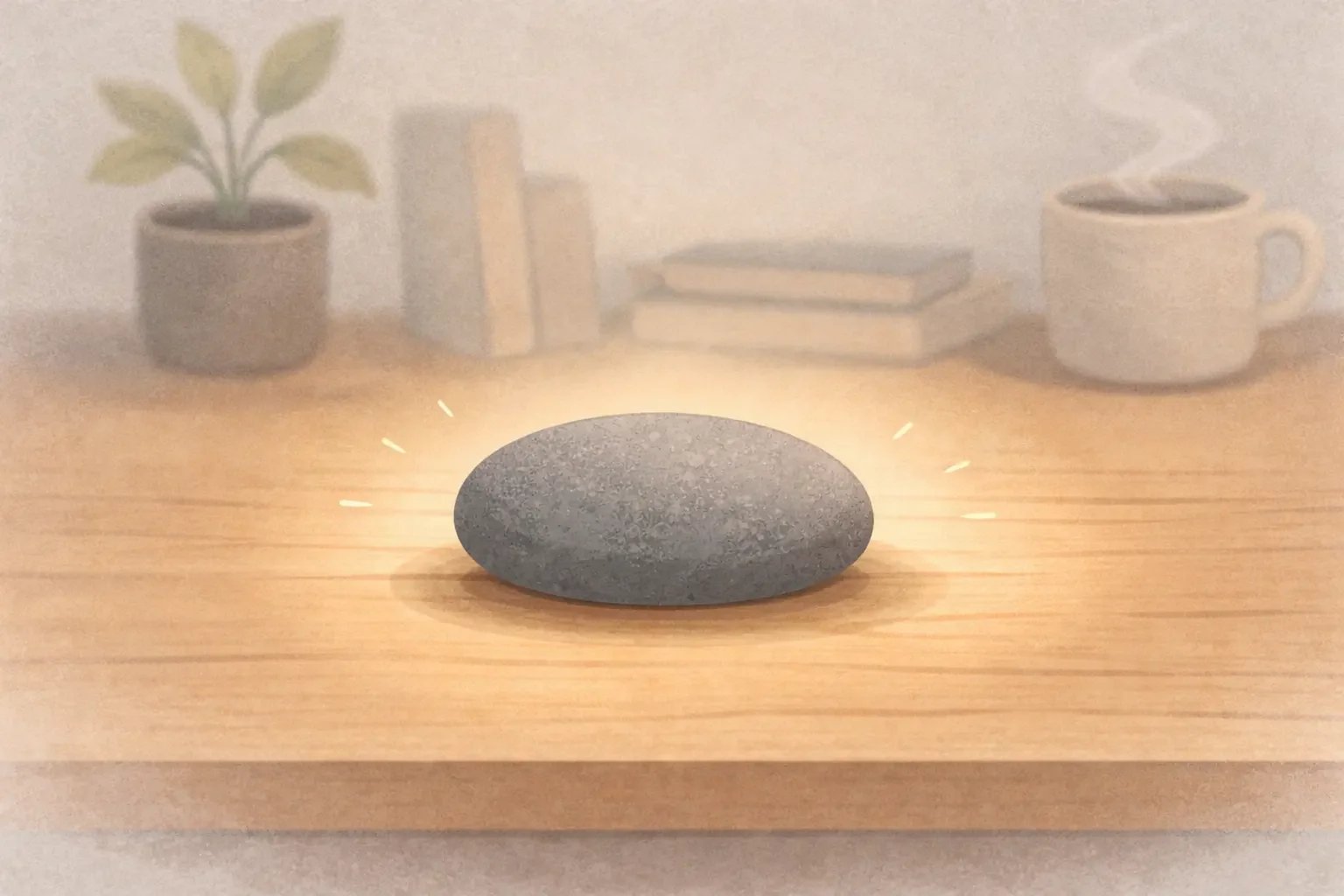
Choose one object in the room and describe it slowly to yourself. You might notice its color, shape, texture, temperature, weight, or how the light hits it.
There’s no right way to do this. The purpose is to anchor your attention in the present moment and give your mind something steady to rest on.
Going slowly often works better than trying to name many things at once.
Most people spend 30 to 90 seconds with the object, or until their attention feels a little more settled.
When it fits: racing thoughts, feeling unreal, scattered, or pulled into a spiral.
Why people use it: a small sense of grounding or mental steadiness, not complete calm.
Common snag: rushing or turning it into a checklist. Let your attention linger.
If it feels overwhelming: it’s okay to pause or stop and try a different skill.
3. Cold Temperature Reset
A brief grounding option for ADHD overwhelm, emotional flooding, or shutdown.
You might try:
running cool water over your wrists
a light splash of cool water on your face
holding something cool wrapped in a towel to your cheek or forehead
A mild temperature change can help interrupt escalation and shift attention out of overload.
Most people use this for 10 to 30 seconds.
When it fits: on the edge of snapping, shutting down, or spiraling quickly.
Why people use it: a short interruption or slight reduction in intensity.
Common snag: going too intense or too long. Cool is enough, and brief is safer.
If it feels overwhelming: pause or switch to a gentler grounding option.

4. The STOP Skill
A DBT pause skill for impulsive reactions and emotional urgency.
S — Stop
T — Take a breath
O — Observe what you notice
P — Proceed with intention
This skill creates a brief pause between urge and action, which can reduce regret and increase choice.
The observe step can be very simple, such as noticing a thought, urge, or body sensation.
Most people use STOP in under one minute, during real-time situations.
When it fits: about to send a message, escalate conflict, interrupt, or quit abruptly.
Why people use it: more pause, not perfect control.
Common snag: skipping the Observe step. One sentence of naming what is happening is enough.
Examples: “I’m overwhelmed”, “My jaw is clenched”, “I want to distract myself”
If it feels overwhelming: focus only on stopping and breathing.
5. Name What’s Happening (10 Seconds)
A quick clarity tool for emotional spikes and reactivity.
Briefly name the emotion:
“This is frustration.”
“This is shame.”
“This is panic.”
Then add: “It makes sense that this feels hard.”
Naming emotions can help reduce intensity and restore a small amount of distance.
This usually takes 10 to 20 seconds.
When it fits: feeling hijacked, reactive, or flooded.
Why people use it: slightly more clarity or steadiness.
Common snag: turning it into analysis. Keep it brief.
If it feels overwhelming: pause and return later, or use a sensory-based skill instead.
When DBT Skills Work Best
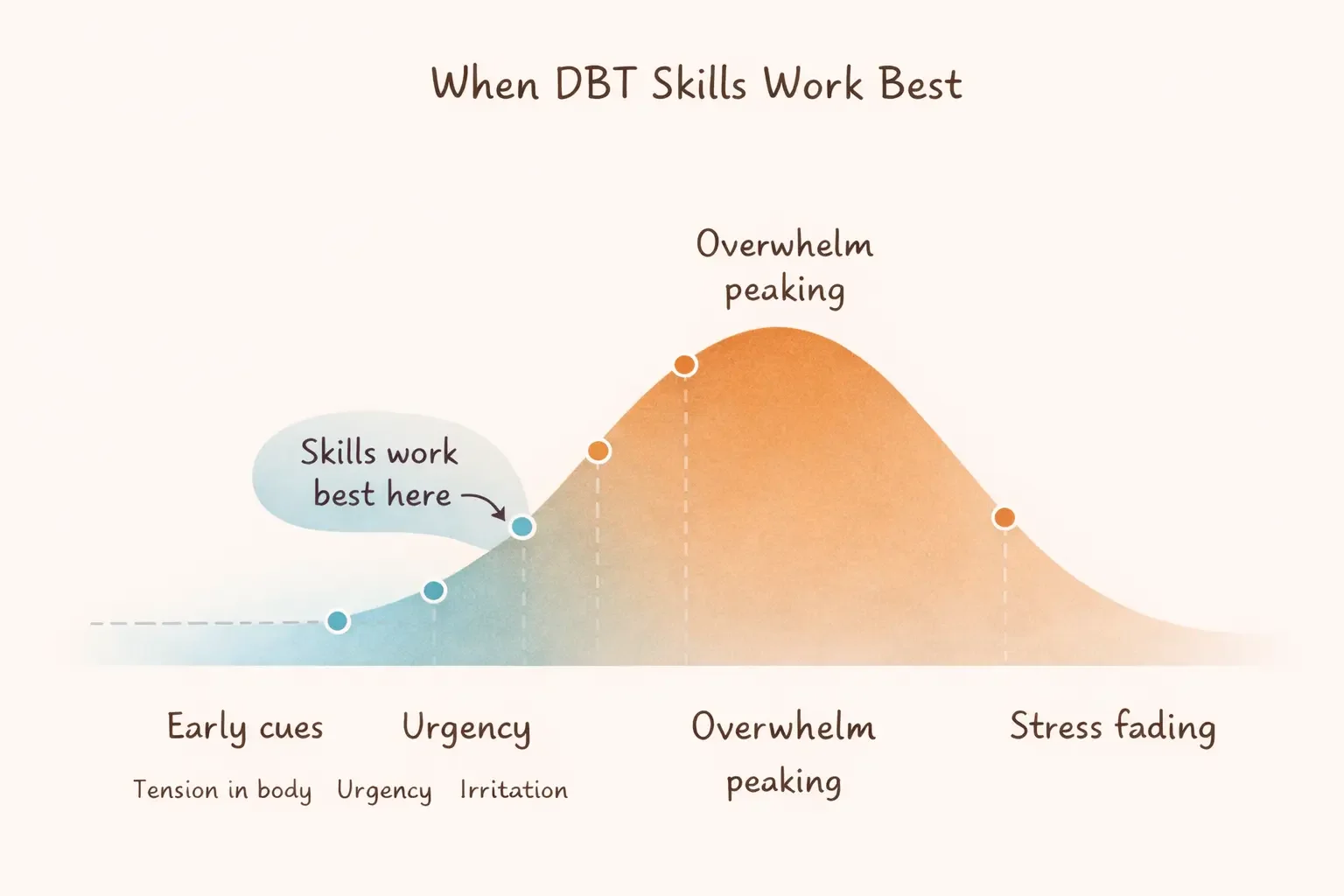
Most skills work better when you use them early, not perfectly.
If you can catch the first signs of activation, skills tend to feel more effective. If you try a skill at the peak of overwhelm, it may still help, but the change can feel smaller and take longer.
Early cues can look like:
Tension in your body
A sudden sense of urgency
A sharp edge of irritation
A fast “I can’t do this” feeling
The impulse to escape, argue, scroll, or quit
The goal is not to erase emotions. The goal is to create a little more space so you can choose your next step.
Why Skills Sometimes Feel Useless
If a skill ever feels like it “didn’t work,” it’s often because it was used late, expected to remove the feeling entirely, or treated like willpower instead of support.
Skills are not meant to magically erase emotions or solve problems.
A helpful reframe: a skill can still be useful if it slows escalation, reduces regret, helps you recover even by a small amount, or creates one more choice than you had before.
If none of that happens after several tries, it’s okay to switch to a different skill.
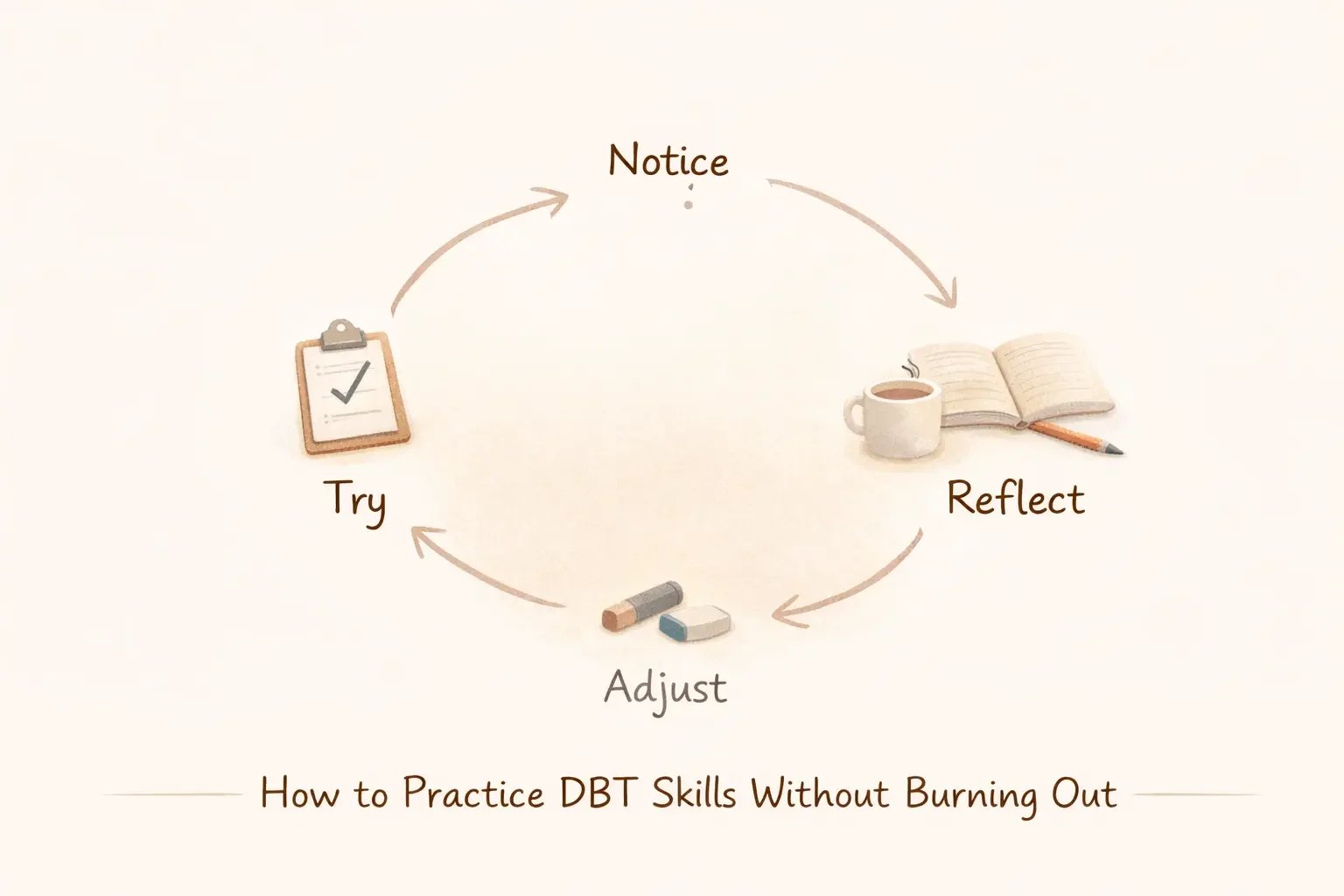
How to Practice DBT Skills Without Burning Out
DBT skills aren’t meant to fix emotions. They’re meant to offer a little support when things are hard.
A gentler way to practice:
Try one skill for a few days, not all of them.
Use it as an experiment, not a test you pass or fail.
Notice small differences, like slightly less urgency or faster recovery.
If it doesn’t help, it’s okay to pause or try a different tool later.
Sometimes a skill helps in ways that are subtle or only noticeable afterward. Other times, it just isn’t the right fit for that moment.
What Practice Can Look Like in Real Life
Below are examples of how people often use these skills in everyday ADHD moments.
At work or school
You notice irritation rising during a task you’ve been avoiding.
You use Slow Exhale Reset for one minute before deciding what to do next.
The task still feels unpleasant, but starting feels more possible.
During conflict
You feel the urge to defend yourself or send a reactive message.
You use the STOP Skill and name what you’re noticing: “I feel activated and want to explain myself.”
You pause long enough to choose a calmer response or delay replying.
During overwhelm
Your body feels heavy and everything feels like too much.
You try a Cold Temperature Reset to interrupt the freeze response.
You regain just enough energy to take one small next step.
During shame spirals
You make a mistake and your inner voice turns harsh.
You use Name What’s Happening: “This is shame. It makes sense this hurts.”
The spiral softens, even if it doesn’t disappear.
Quick Summary
If you only take one thing from this page, let it be this: skills tend to work best when you use them early, not perfectly.
You might try choosing one tool and practicing it for a week. A helpful aim is a small shift, not a total reset. A skill may be helping if it creates a little more space, reduces regret, or helps you recover sooner.
If it’s useful, you can pick one situation to practice with, such as conflict, task paralysis, shutdown, or screen loops.
Further Reading
If you’d like a broader view of ADHD support beyond in-the-moment skills, these pages may help:
ADHD and Technology →
Explores how screen habits, digital overload, and attention challenges can interact.Adults Living with ADHD →
A closer look at how ADHD often appears in adulthood and why many people are identified later in life.
If you’re looking for DBT for ADHD counseling in Gainesville or across Florida via telehealth, you can also visit my DBT for ADHD therapy page.