ADHD and Technology: Why Your Phone Can Feel So Hard to Put Down
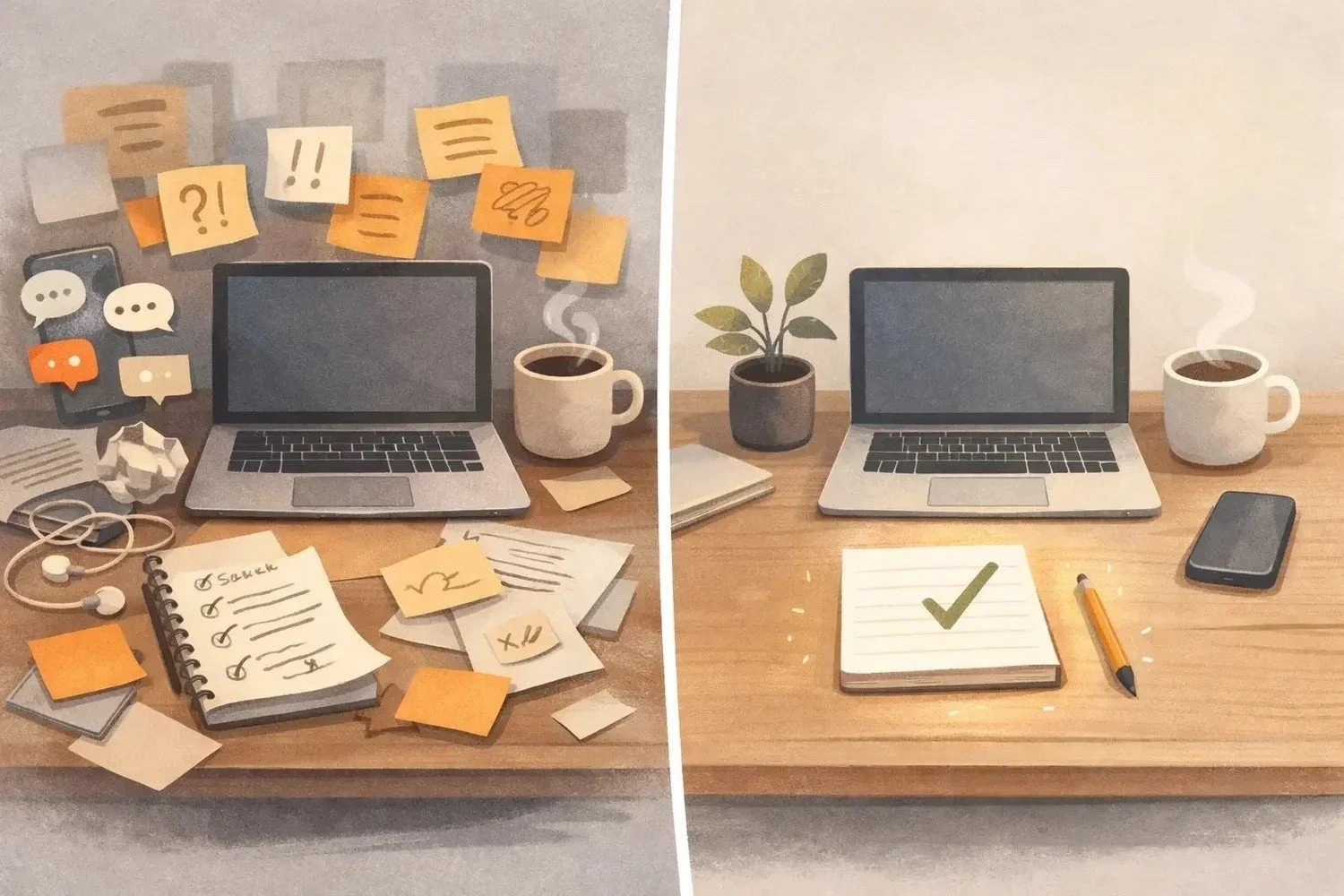
For adults with ADHD, technology can feel especially hard to manage.
Technology interacts with the exact areas where ADHD can already make life harder: attention and emotional regulation.
This means it can become difficult to regulate when your brain is already working hard to manage boredom, overwhelm, stress, and transitions.
When I work with adults in ADHD therapy in Gainesville, I often see that the problem is how easily technology pulls attention away before the person has had a chance to fully choose what they want to do.
How this pattern shows up:
For many adults I work with, the issue shows up in smaller, more frustrating moments:
Opening your phone for one thing and losing 30 minutes. You meant to check the weather, answer a text, or look something up. Suddenly you are several apps away from where you started.
Feeling busy all day but not finished. You touched ten different tasks, responded to small things, checked updates, and still did not complete the thing you meant to do.
Using your phone to avoid the stress of starting. The task may matter, but it feels boring, unclear, or emotionally uncomfortable. The phone becomes a quick way to get relief.
This often leads to feeling ashamed afterward. The hardest part is not always the time lost. It is the familiar thought: “Why did I do this again?”
Why ADHD and Digital Distraction Feel Linked
ADHD can make it harder to regulate attention, especially when a task is boring, unclear, delayed, or emotionally uncomfortable.
Technology gives the brain something immediate. That can feel especially appealing when the task in front of you feels slow, vague, or unrewarding.
This is why many adults with ADHD do not simply “get distracted” once. They get pulled away repeatedly in small moments throughout the day.
Research has also found a link between ADHD symptoms and problematic social media use, especially when social media becomes difficult to regulate rather than simply frequent.
The ADHD “Micro-Tug” Effect
One of the patterns I pay attention to is what I think of as the ADHD micro-tug effect. A micro-tug is a small pull away from the task in front of you.
It might be checking the weather before leaving the house, then seeing a distracting notification. Or it might be looking up one thing for work, then ending up on another site.
Each pull may seem small. But over time, those small pulls can keep someone from ever getting traction.
ADHD, Overwhelm, and the Phone as an Escape Hatch
Sometimes the phone is not the main problem. Sometimes the phone is the escape hatch.
When I work with ADHD and technology use, I am usually not just looking at the device. I am looking at what the device is helping the person avoid, soothe, or delay.
Instead of only asking, “How do I stop scrolling?” it can help to ask:
What was I feeling right before I picked up my phone?
What task was I avoiding?
What part of the task felt unclear or uncomfortable?
Those questions give more information than shame does. And also tells me if there is an emotional regulation aspect to why technology is so distracting for the specific person. Often there is, which means working directly with overwhelm and emotions can be helpful in therapy.

ADHD-Friendly Strategies for Technology Use
For adults with ADHD, small environmental changes often work better than big promises. If the plan depends on perfect self-control, it probably will not hold up well on a stressful day.
Create more friction
For adults with ADHD, the phone often wins because it is easy to reach before you have time to think. Creating friction means making the phone a little harder to access during the moments when you are most likely to get pulled away.
This might include:
Put your phone across the room while working. Even a small amount of distance can help interrupt the automatic reach.
Turn off nonessential notifications. You may not need every app to have permission to interrupt your attention.
Use app limits or focus settings. These do not have to be perfect. They can simply create a pause before you open something out of habit.
Keep your phone out of the bedroom at night. If late-night scrolling keeps happening, the most helpful change may be removing the phone from the place where the pattern starts.
This is not about punishing yourself for using technology. It is about noticing where your attention is most vulnerable and making the phone slightly less available in those moments.
Name the transition
Before opening your phone, pause long enough to name what is actually happening.
This is not about judging the behavior. It is about figuring out what direction you need to go next.
“I am checking this for two minutes.” If that is true, the next step may be setting a clear stopping point. Check the thing you meant to check, then put the phone back down before it turns into something else.
“I am avoiding starting.” If the phone is helping you avoid a task, the next step is probably not a long lecture about self-control. It may be making the task smaller.
“I am overwhelmed and looking for relief.” If the phone is being used to soothe stress, the next step may be regulating your body before returning to the task. That might mean standing up, taking a breath, getting water, or giving yourself a few minutes away from the screen without turning it into another spiral.
Naming the transition helps you respond to the actual problem instead of treating every phone check like the same failure.
This can be especially helpful when technology use is tied to ADHD and task paralysis, where the person wants to begin but feels stuck at the starting line.
Quick ADHD Resets
When you notice yourself getting pulled into your phone, it can help to slow the moment down before deciding what to do next. For many adults with ADHD, the phone comes out so quickly that there is barely any space between the urge and the behavior.
Put both feet on the floor and look around the room.
This sounds simple, but it can help bring attention back to the present moment. If you have been scrolling, switching apps, or jumping between tabs, your attention may be moving faster than your body can keep up with.
I often think of this as helping the brain “re-enter the room.” You are noticing where you are, what is around you, and what you were doing before the phone pulled you away.
Take one slow breath before deciding whether to keep scrolling.
The breath is not meant to magically fix the problem. It creates a small pause.
That pause can give you enough room to notice what is happening. Maybe you are tired. Maybe you are avoiding an email. Maybe you are overwhelmed and looking for a quick break.
A client may describe this as the moment where they realize, “I don’t actually want to be on my phone. I just don’t want to start the thing in front of me.”
That kind of awareness matters. It gives you more information than shame does, and it makes it easier to choose one small next step.
Working With ADHD Instead of Fighting Yourself
Technology can be a real problem for adults with ADHD, but it is rarely just a technology problem.
It is often connected to stress, boredom, shame, avoidance, lack of structure, and the difficulty of starting tasks that do not offer immediate reward.
But it is possible to understand the pattern clearly enough that you can work with it. Technology does not have to control the day.
Changing that relationship starts with understanding why the pull feels so strong in the first place.
Further Reading
Living With Adult ADHD: How Shame Builds Over Time
A closer look at how adult ADHD can become tied to shame over time, especially when years of misunderstood struggle start to feel like a character flaw.
A fuller explanation of how therapy can help adults with ADHD understand their patterns, build better structure, and work with shame without relying only on willpower.
About the Author: If you are looking for support, I offer ADHD therapy in Gainesville and telehealth across Florida.